

5083 Marine Grade Aluminum
For workboats, ferries, fishing vessels, offshore structures, and deck equipment, 5083 marine grade aluminum is valued for high strength without sacrificing seawater corrosion resistance. The material's most important purchasing concern is not simply nominal chemistry. It is whether the supplied temper, welding practice, and inspection records will control corrosion around welds during service.
This alloy belongs to the non-heat-treatable 5xxx aluminum family. Its strength is obtained primarily through magnesium alloying and strain hardening, rather than precipitation heat treatment. That makes it practical for fabricated marine structures, but it also means weld heat can reduce strength in the heat-affected zone.
Why It Matters
A vessel hull can use compliant material and still develop avoidable problems if welding, storage, or material traceability are poorly controlled. The highest-risk locations are often:
Continuous weld seams exposed to salt spray.
Deck-to-bulwark joints that retain standing water.
Areas with dissimilar-metal fasteners.
Welded panels operating at elevated temperature for extended periods.
Crevices beneath fittings, insulation, or non-draining supports.
The practical objective is to maintain corrosion resistance while accounting for lower post-weld mechanical properties. Material selection should therefore be reviewed alongside fabrication drawings and welding procedure specifications.
Alloy Data
ASTM B209/B209M identifies 5083 as an aluminum-magnesium alloy containing 4.0% to 4.9% magnesium, 0.4% to 1.0% manganese, and 0.05% to 0.25% chromium by weight. These limits should be verified against the mill test certificate for each production batch.
| Property | Typical Requirement or Reference | Purchasing Relevance |
|---|---|---|
| Alloy family | Aluminum-magnesium, 5xxx series | Good natural resistance in marine atmospheres |
| Density | Approximately 2.66 g/cm³ | Supports vessel weight reduction calculations |
| Common marine tempers | O, H116, H321 | H116 and H321 are commonly specified for marine service |
| Main fabrication issue | Heat-affected-zone softening | Design weld regions using post-weld values |
| Corrosion concern | Sensitization and exfoliation risk | Requires controlled temperature exposure and verified temper |
ASTM B928/B928M covers high-magnesium aluminum alloy products in H116 and H321 tempers intended for marine service and similar environments. It includes additional requirements associated with exfoliation-corrosion resistance. When a specification calls for marine material, referencing only the alloy number is incomplete. State the product standard and required temper.
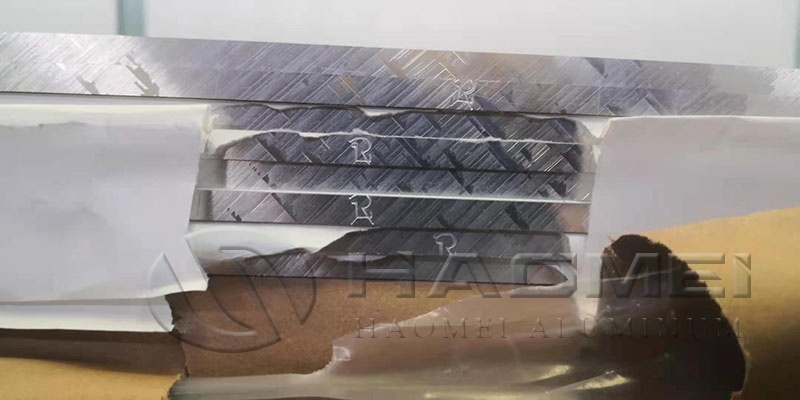
For structural applications, request 5083 aluminum plate with clear thickness tolerances, temper, ultrasonic testing requirements where applicable, and mill certificates tied to the delivered identification marks.
Temper Choice
Temper selection changes both fabrication behavior and corrosion assurance.
| Temper | Best Fit | Important Check |
|---|---|---|
| O | Deep forming, complex curved parts | Lower strength than strain-hardened tempers |
| H116 | Hull plating and structures exposed to seawater | Confirm ASTM B928/B928M compliance when specified |
| H321 | Marine structures requiring stabilized strain-hardened material | Review corrosion-test documentation and service temperature |
H116 and H321 are not interchangeable merely because both are marine-associated tempers. Confirm the exact condition required by the vessel design, classification rules, and applicable contract specification.
For higher-strength alternatives in certain welded structures, 5383 aluminum plate may be evaluated by the engineering team. Substitution should never be made based on strength alone because weldability, forming limits, corrosion behavior, and approval requirements can differ.
Welding Controls
5083 is commonly welded with gas metal arc welding or gas tungsten arc welding. Filler selection should follow the qualified welding procedure rather than a generic preference. AWS A5.10/A5.10M covers aluminum and aluminum-alloy welding electrodes and rods, including commonly specified ER5183 and ER5356 filler classifications.
Use this fabrication checklist before production welding:
Remove moisture, oil, oxide, paint, and salt contamination from joint edges.
Segregate aluminum-only brushes and grinding tools to prevent iron contamination.
Qualify welding procedure specifications using the actual base-metal temper and thickness range.
Limit unnecessary heat input and repeated repair cycles.
Design weld access to avoid incomplete fusion, crevices, and water traps.
Record filler classification, shielding gas, welding parameters, and welder qualification.
Inspect critical seams using the non-destructive examination method required by the project.
Welding softens strain-hardened material adjacent to the weld. Structural calculations must use approved post-weld allowable properties, not parent-metal certificate values alone. This is especially important for high-load brackets, longitudinals, crane foundations, and pressure-containing assemblies.
Corrosion Tests
The phrase marine grade does not mean the alloy is immune to every corrosion mechanism. High-magnesium 5xxx alloys can become sensitized after prolonged exposure to elevated temperatures, which may increase susceptibility to intergranular or exfoliation corrosion.
ASTM G66, commonly called the ASSET test, is used to evaluate exfoliation-corrosion susceptibility in 5xxx series aluminum alloys. ASTM B928/B928M references corrosion-performance requirements for qualifying H116 and H321 material. Request test evidence when the application involves prolonged warm service, high salinity, or critical safety structures.
Ask suppliers to provide:
Mill test certificate with heat number and chemical analysis.
Temper and governing material standard.
Corrosion-test documentation when required by specification.
Mechanical test results for the applicable thickness range.
Traceable packing labels matched to certificate records.
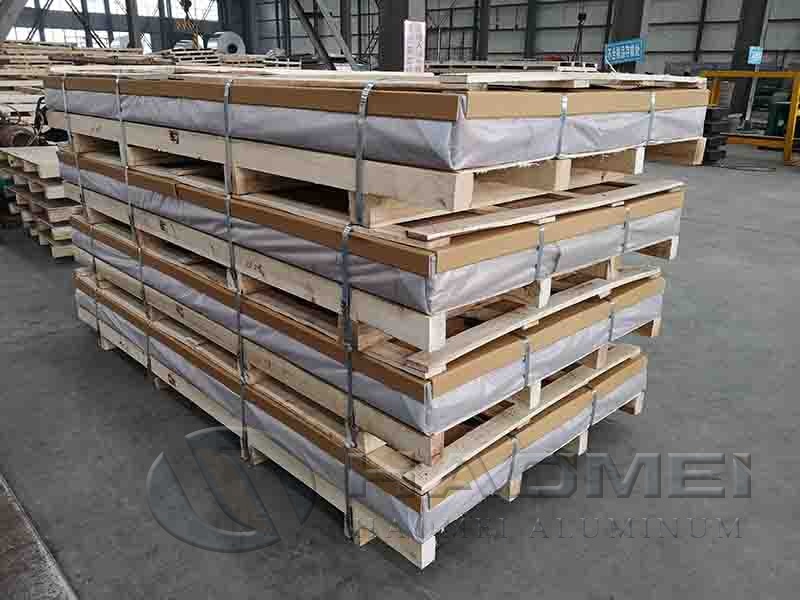
Surface condition statement, including protective film or paper where needed.
Cost Checks
Quoted material price should be compared on a like-for-like basis. A lower initial figure can omit testing, traceability, protective packing, dimensional control, or certification needed for marine construction.
| Cost Item | Question to Ask | Risk if Omitted |
|---|---|---|
| Temper | Is H116 or H321 stated on the quotation? | Incorrect corrosion or strength performance |
| Standard | Does the offer cite ASTM B928/B928M or project standard? | Ambiguous marine-service suitability |
| Certificate | Is the heat number traceable to the certificate? | Material cannot be verified at inspection |
| Cutting | Are edge condition and dimensional tolerances defined? | Extra machining and welding preparation |
| Packing | Is protection suitable for salt-air transport? | Staining and surface damage before fabrication |
A technically complete purchase specification should state alloy, temper, standard, dimensions, tolerances, required documentation, corrosion-test requirement, inspection scope, and packing method. This approach protects welded marine structures from preventable corrosion issues before fabrication begins.