

Al 5052 Thermal Conductivity
For marine fabricators, the principal concern with AL 5052 thermal conductivity is not simply the published value. The practical issue is whether heat can move through a plate, tread deck, enclosure, or piping interface without creating hot spots, condensation, thermal distortion, or galvanic-corrosion risks.
A commonly published room-temperature value for 5052 aluminum is approximately 138 W/m·K. This is far higher than austenitic stainless steel, but lower than commercially pure aluminum. The final design value must match the supplied temper, thickness, operating temperature, and joint configuration.
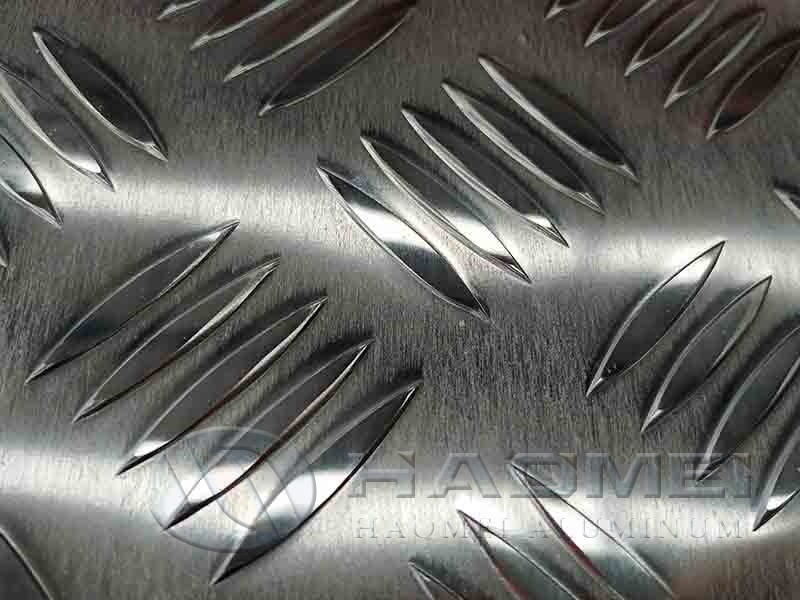
Core Data
5052 is a non-heat-treatable aluminum-magnesium alloy. Aluminum Association composition limits for Alloy 5052 include 2.2-2.8% magnesium and 0.15-0.35% chromium. These alloying additions improve corrosion resistance and strength, but reduce heat conduction compared with pure aluminum.
| Material, typical condition | Thermal conductivity at about 20-25°C | Relative marine implication |
|---|---|---|
| 1050 aluminum | About 227 W/m·K | High heat transfer, low structural strength |
| 5052 aluminum | About 138 W/m·K | Good conductivity with useful corrosion resistance |
| 5083 aluminum | About 117-121 W/m·K | Higher-strength hull material, lower heat transfer |
| 6061-T6 aluminum | About 167 W/m·K | Common extruded structural alloy |
| 316L stainless steel | About 15 W/m·K | Heat moves slowly; substantial thermal discontinuity |
Values above are representative engineering data, not acceptance criteria. Published figures may differ with test method, temper, temperature, and product form. For an equipment contract, require the mill or laboratory to state the test method and temperature used for any conductivity guarantee.
Design Check
Use Fourier's law for one-dimensional steady heat flow through a flat plate:
q = k × A × ΔT / L
Where q is heat flow in watts, k is thermal conductivity, A is area, ΔT is temperature difference, and L is thickness.
For a 5052 panel 8 mm thick with a 20°C temperature difference, the theoretical conductive heat flux is:
138 × 20 / 0.008 = 345,000 W/m²
This result does not mean a vessel panel transfers that heat in real service. Air-side convection, seawater-side film resistance, paint, insulation, fouling, and contact resistance usually control the actual thermal performance. The calculation shows why uninsulated aluminum readily transmits temperature changes and why condensation control deserves early attention.
Specify These Inputs
Before selecting sheet or plate, confirm:
Service temperature range, including solar gain and machinery-space exposure.
Plate thickness and whether one or both surfaces receive insulation or coating.
Required heat flux, surface-temperature, or condensation limit.
Welded area, weld spacing, and post-weld mechanical-property requirement.
Contact with stainless steel, carbon steel, copper alloys, or wet insulation.
Whether the material certification must include thermal conductivity testing.
Temper Effects
5052 is commonly supplied as H32, H34, H36, H38, or O temper. Strain hardening raises strength, but thermal conductivity is not normally the primary basis for temper selection. Material selection should first satisfy forming, strength, fatigue, and corrosion requirements.
For welded fabrications, do not assume the parent-material temper applies across the heat-affected zone. Welding locally reduces the strain-hardened condition of 5xxx alloys. This matters particularly for deck panels, tanks, and brackets where thermal expansion and cyclic loading occur together.
For formed marine sheet, 5052 aluminum plate is often selected for walkways, lockers, light-duty tanks, cladding, and equipment covers. For highly loaded hull plating, project specifications more often evaluate 5083, 5086, 5383, or 5059 because their strength and marine plate qualifications better suit demanding structural service.
Stainless Interfaces
A 5052-to-316L joint is a thermal and corrosion transition. With aluminum conducting roughly nine times faster than 316L, a stainless flange, pipe support, or seamless pipe connection can create a localized temperature gradient.
The larger marine risk is galvanic corrosion when aluminum and stainless are electrically connected in an electrolyte. Specify an insulating gasket, non-absorbent isolating washers, sealed edges, and a coating system compatible with the service environment. Avoid copper-bearing anti-seize compounds at aluminum interfaces.
Where a permanent dissimilar-metal connection is necessary, an Al-steel Transition Joint can provide a controlled interface for qualified welded assemblies. Confirm the joint material, welding procedure, service temperature, and classification-society acceptance before release.
Standards Check
Use standards for the correct purpose:
| Requirement | Relevant reference | What to verify |
|---|---|---|
| Chemical composition | EN 573-3 or Aluminum Association alloy registration | Alloy 5052 chemistry |
| Sheet and plate delivery | ASTM B209/B209M or EN 485 series | Dimensions, temper, mechanical requirements |
| Marine corrosion-critical plate | ASTM B928/B928M, where applicable | Do not assume 5052 qualifies under a 5xxx marine-plate requirement |
| Inspection certificate | EN 10204, 3.1 certificate | Heat number, chemistry, tensile results, traceability |
| Vessel construction | DNV, ABS, Lloyd's Register, or flag-state rules | Project-specific approval and welding requirements |
ASTM B209/B209M covers general aluminum and aluminum-alloy sheet and plate requirements. It does not automatically make thermal conductivity a certified property. If conductivity is contract-critical, add a separate requirement stating minimum value, sample direction, test temperature, test method, and reporting format.
Cost Drivers
5052 pricing tracks several measurable inputs: LME aluminum movement, regional physical premium, magnesium cost, rolling conversion, temper, thickness, surface finish, testing, and freight. Thin painted sheet, checker plate, precision-cut blanks, and small mixed-size releases carry more conversion cost than standard mill-width sheet.
For stable project costing, separate the quotation into metal index, conversion premium, fabrication, certification, packing, and logistics. This avoids treating a temporary aluminum-market movement as a change in base fabrication cost.
Release Checklist
State 5052 grade, product form, thickness, width, length, and temper.
Identify the applicable ASTM or EN delivery standard.
Request EN 10204 3.1 traceability where required.
Add conductivity testing only when the thermal model depends on it.
Define coating, insulation, and drainage at stainless-steel contact points.
Review welding procedures for strain-hardened 5xxx material.
Verify classification requirements before cutting material.
Reference data sources: Aluminum Association alloy registration data; ASTM B209/B209M; EN 573-3; EN 485-2; EN 10204; ASM Specialty Handbook, Aluminum and Aluminum Alloys; EN 10088 stainless steel property data.