

Different Types of Aluminium Fittings For Boat
In the vast system of a ship, the piping system is like the blood vessels of the human body, responsible for transporting critical media such as fuel, fresh water, and coolant, directly affecting the ship's navigation safety and operational efficiency.
Aluminium fittings for boats, as core components for connection, steering, and diameter changes, are particularly important in terms of performance and material selection. Compared to traditional steel fittings, aluminum pipe fittings, with their advantages of light weight, corrosion resistance, and good thermal conductivity, are increasingly widely used in the marine industry.
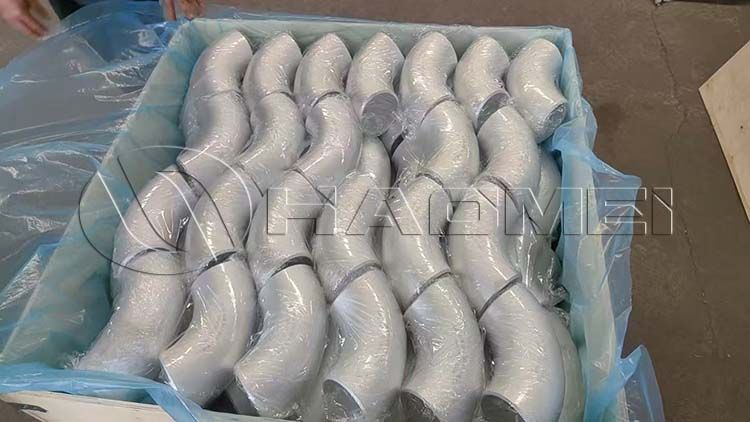
Aluminum elbows
The compact internal space of ships often requires frequent pipe turns, and aluminum elbows are the core fittings to meet this need. They can connect straight pipes into bends of different angles, such as 90 degrees and 45 degrees, according to the pipeline route, avoiding interference between pipes while ensuring smooth media flow.
Compared to other materials, aluminium elbows are not only lighter, effectively reducing the overall load of the ship, but their excellent resistance to seawater corrosion is also particularly outstanding, greatly extending the service life of the fittings.
Aluminum tees
When ship pipelines need to achieve media diversion or merging, aluminum tees become irreplaceable "hub" components. Aluminum tees typically come in two structures: T-type and Y-type. T-type tees are suitable for vertical flow branching, while Y-type tees facilitate smoother flow of the medium and reduce pressure loss.
In a ship's freshwater supply system, aluminum tees are essential for connecting pipelines branching from the main water pipe to various areas such as crew quarters, galleys, and engine rooms. In cooling systems, they precisely distribute coolant to various heat-generating devices, ensuring efficient heat dissipation.
The advantages of aluminum tees lie not only in their structural stability but also in their excellent processing performance. Different diameters and specifications can be customized to meet the specific needs of the ship, perfectly adapting to complex piping networks.
Aluminum flanges
For large-diameter, high-pressure pipeline connections on ships, aluminum flanges are crucial for ensuring sealing and robustness. They tightly connect the ends of two pipes with bolts, forming a stable whole that can withstand high pressure and prevent leakage.
In critical systems such as main engine fuel supply pipelines and boiler steam pipelines, aluminum flanges play a vital role—leakage in these systems can lead to serious safety accidents, and the high strength and corrosion resistance of aluminum flanges fundamentally reduce this risk.
Furthermore, aluminum flanges are relatively easy to install and remove. When pipelines need maintenance or replacement, simply loosening the bolts is sufficient, greatly improving the efficiency of ship maintenance. This is undoubtedly invaluable for ships that spend long periods at sea.
Aluminum reducers
In ship piping systems, the interface diameters of different equipment often differ. Aluminum reducers provide a "smooth channel" for this diameter transition. They can connect two pipes of different diameters, preventing eddies or pressure losses caused by sudden changes in diameter during medium flow, thus ensuring the operational stability of the piping system.
Many people overlook pipe end fittings, but the protective role of aluminum pipe caps for ship piping cannot be ignored. They are mainly used to seal pipe ends or temporarily seal unconnected interfaces, preventing dust, debris, seawater, etc., from entering the pipe and causing blockage or corrosion.
During the shipbuilding phase, pipe ends not yet connected to equipment are sealed with aluminum pipe caps; during navigation, if a section of pipe needs to be temporarily shut down, aluminum pipe caps also provide a reliable sealing effect.
Aluminum pipe caps have a simple structure and are usually fixed by threaded connection or welding. They are easy to install and have good sealing performance. Although they are small in size, they are the "last line of defense" to ensure the cleanliness and safety of ship pipeline systems.