

Aluminum Clad Steel
Holiday shutdowns create a rare chance to finish marine refit work without taking vessels out of service twice. They also create a hard deadline. If the aluminum deckhouse, steel hull, marine aluminum sheet, stainless pipe, welding wire, and pipe fittings do not arrive as one controlled package, the yard loses days on fit-up, approvals, and rework.
For mixed-metal structures, the top concern is galvanic corrosion at aluminum-to-steel interfaces. Aluminum clad steel solves this specific problem by creating a factory-bonded transition zone, so the yard can weld aluminum to the aluminum side and steel to the steel side instead of improvising a direct dissimilar-metal weld on site.
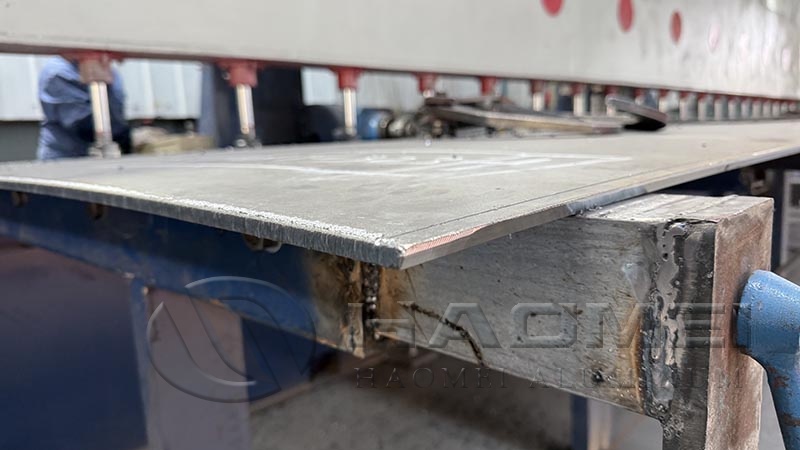
Holiday refit problem: mixed metals, wet service, fixed dates
Marine structures often combine aluminum superstructures with steel hulls to reduce weight above the waterline while keeping hull strength and cost under control. The difficulty starts where the two metals meet.
ISO 8044 defines galvanic corrosion as corrosion caused by electrochemical action between dissimilar metals in contact through an electrolyte. Seawater is a strong electrolyte, so an unplanned aluminum-steel contact can accelerate local attack, coating breakdown, and fastener deterioration.
The practical holiday risk is not only corrosion after launch. It is schedule loss during the shutdown window:
| Refit issue | What happens in the yard | Cost impact during holidays |
|---|---|---|
| Direct aluminum-to-steel welding attempt | Procedure is rejected or produces brittle intermetallics | Rework, wasted hot-work permits |
| Missing transition material | Aluminum sheet and steel parts arrive, but cannot be joined safely | Vessel remains alongside after holiday |
| Unclear certificates | Class surveyor cannot release the joint | Standby labor and delayed paint work |
| Wrong cut size | Yard trims bonded plate manually | Bond edge damage and fit-up delay |
The holiday solution is to treat the transition joint as a controlled material, not an accessory. For deckhouse-to-hull interfaces, specify an Al-steel Transition Joint with the alloy stack-up, dimensions, certificates, and weld procedure requirements confirmed before the shutdown begins.
What to specify before Christmas, Golden Week, or Lunar New Year
A reliable order package should remove decisions from the holiday worksite. Use this checklist before releasing drawings or purchase orders.
| Item to confirm | Required action | Why it matters |
|---|---|---|
| Service area | Mark splash zone, deck joint, bulkhead, or dry interior | Coating and corrosion control differ by exposure |
| Aluminum alloy side | Match the marine aluminum sheet or profile, commonly 5xxx or 6xxx series as specified by design | Reduces filler mismatch and cracking risk |
| Steel side | Confirm structural steel grade used in the hull or support frame | Supports approved steel-side welding |
| Bonding method | Require factory-bonded bimetal material, commonly explosion welded or roll bonded where applicable | Prevents on-site dissimilar-metal welding |
| Dimensions | Order cut-to-length strips or plates with machining allowance | Protects the bonded interface from rough trimming |
| Inspection documents | Request material test certificates, dimensional report, and bond inspection records if specified | Speeds class and QA review |
| Welding package | Align WPS/PQR with yard standards such as ISO 15614 series, ISO 9606 welder qualification, or AWS D1.1/D1.2 where contractually used | Prevents approval disputes |
| Coating plan | Isolate exposed edges, seal fasteners, and repair coatings after welding | Reduces galvanic cell formation |
SOLAS Chapter II-1 Regulation 3-1 requires ships to be designed, constructed, and maintained in compliance with structural requirements of a recognized classification society or equivalent national standards. In practice, ABS, DNV, LR, BV, RINA, and other class societies may review materials, welding procedures, and survey records depending on vessel type and contract. Do not assume a transition strip is acceptable only because it fits the drawing; keep certificates ready for survey.
For marine material packages, combine the bonded transition pieces with adjacent products in one technical review: marine aluminum sheet, extruded profile, compatible welding wire, stainless seamless pipe, and pipe fittings. This helps the yard check alloy compatibility, filler selection, and package markings before holiday receiving teams are reduced.
60-day procurement schedule and comparison table
Holiday conversion depends on timing. Large ports, mills, freight forwarders, and customs brokers often work shortened schedules around Christmas-New Year and Lunar New Year. A practical plan starts 60 days before hot work.
| Timing | Task | Output needed |
|---|---|---|
| Day -60 to -45 | Freeze interface drawings and joint lengths | Cut list with tolerances |
| Day -45 to -35 | Confirm alloy stack-up, steel grade, edge condition, and certificates | Technical offer ready for approval |
| Day -35 to -25 | Reserve production and inspection slot | Confirmed delivery date and packing method |
| Day -25 to -15 | Arrange freight, Incoterms 2020 responsibility, and holiday customs schedule | Booking and document draft |
| Day -15 to -7 | Receive MTCs, packing list, and dimensional records | QA file ready for yard receipt |
| Day -7 to shutdown | Stage transition joints beside aluminum sheet, profiles, wire, pipe, and fittings | No missing interface material |
Use a comparison table when deciding whether the clad transition material is justified for the shutdown scope.
| Option | Suitable use | Main risk | Holiday suitability |
|---|---|---|---|
| Direct mechanical fastening with insulation | Light-duty, inspectable joints | Seal failure, crevice corrosion, loosening | Acceptable only where design permits access |
| Adhesive bonding | Non-structural panels or secondary parts | Temperature, surface prep, approval limits | Risky if cure time and inspection are tight |
| Direct aluminum-to-steel welding | Not recommended for structural marine joints | Brittle intermetallic compounds and cracking | No-go for controlled refit work |
| Factory-bonded aluminum-steel transition material | Structural interfaces between aluminum and steel assemblies | Requires correct specification and certification | Strong fit for planned holiday refits |
Pricing should be checked against measurable variables rather than a vague per-piece quote. Ask suppliers to separate material, cutting, inspection, packing, and freight. Aluminum can be referenced against LME published aluminum prices, while stainless seamless pipe may be affected by nickel and alloy surcharges. The transition joint itself also reflects bonding process, thickness stack-up, yield, inspection scope, and quantity per drawing.
For faster approval, send this package to the supplier in one file set:
- Vessel type and class society, if applicable.
- Drawing of aluminum-to-steel interface with weld sides marked.
- Aluminum alloy, steel grade, thickness, and length list.
- Required certificate type and language.
- Surface condition, edge protection, and packing requirement.
- Required arrival date at yard, not only shipment date.
- Related materials list: marine aluminum sheet, profile, welding wire, stainless seamless pipe, and pipe fittings.
When the holiday window is fixed, the product benefit is simple: the bonded transition material converts a difficult dissimilar-metal interface into two familiar welds. That reduces galvanic corrosion exposure, avoids rejected direct welding, and gives the yard a documentable path from material receipt to class review and installation.