

Al 5052 Properties
Al 5052 Properties: 5 Recent Q&A Answers for Marine Sheet Use
The questions below reflect recurring English queries appearing on social Q&A and search discussions during the last three months. Many come from people comparing marine aluminum sheet, profiles, welding wire, pipe fittings, and mixed-metal assemblies for boats, docks, tanks, trailers, and coastal equipment.
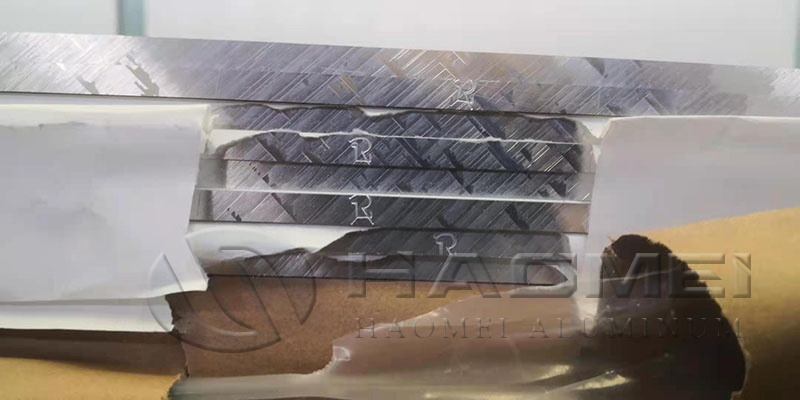
Quick reference: typical al 5052 properties
5052 is an Al-Mg alloy with magnesium as its main alloying element. It is not heat-treatable, so strength is adjusted mainly by strain hardening tempers such as O, H32, H34, and H112. Values vary by standard, thickness, and mill practice, but the table gives a practical starting point.
| Property | Typical 5052-O | Typical 5052-H32 | Why it matters in marine work |
|---|---|---|---|
| Density | 2.68 g/cm3 | 2.68 g/cm3 | Light structures, easier handling |
| Ultimate tensile strength | 170-215 MPa | 215-265 MPa | Panel and bracket load capacity |
| Yield strength | 65-90 MPa | 160-200 MPa | Resistance to permanent deformation |
| Elongation | 12-20% | 7-12% | Forming, bending, rolling |
| Elastic modulus | About 70 GPa | About 70 GPa | Stiffness estimation |
| Corrosion resistance | Excellent | Excellent | Salt air, splash zones, fuel tanks |
| Weldability | Excellent | Excellent | MIG, TIG, and repair welding |
1. What are the real mechanical properties of 5052-H32 aluminum?
The most asked version of this question is about whether online data sheets are trustworthy. They are useful, but they often mix metric and imperial values, quote different thickness ranges, or describe minimums rather than typical production results.
For 5052-H32 sheet, a realistic working range is about 215-265 MPa tensile strength and 160-200 MPa yield strength. The H32 temper means the alloy has been strain hardened and then stabilized to roughly one-quarter hard condition. It is stronger than 5052-O, but it still bends better than many higher-strength marine alloys.
For marine fabrication, the important point is not only strength. 5052-H32 is popular because it balances moderate strength, clean forming, and very good corrosion resistance. It is often used for deck plates, cabin panels, fuel tanks, small craft parts, equipment covers, and non-critical marine structures. When a drawing requires sheet that must be bent, rolled, or flanged, 5052 aluminum plate is often easier to process than stiffer alternatives.
2. Is al 5052 good for saltwater and marine environments?
Yes, 5052 performs very well in saltwater exposure because magnesium improves resistance to seawater corrosion. It is widely used in marine sheet work, docks, pressure vessels, tanks, and coastal enclosures. It also has good resistance to many industrial atmospheres.
However, good corrosion resistance does not mean zero maintenance. Crevice areas, trapped seawater, dissimilar metal contact, and poor drainage can still create corrosion problems. If 5052 sheet is fastened directly to carbon steel or stainless steel without insulation, galvanic corrosion may occur. Use non-absorbent isolation washers, compatible sealants, correct fasteners, and drainage design.
| Marine condition | 5052 performance | Practical note |
|---|---|---|
| Salt spray | Very good | Rinse deposits where possible |
| Full immersion | Good for many parts | Check design rules for hull-critical use |
| Fuel tank service | Commonly used | Welding quality and leak testing are essential |
| Dissimilar metal contact | Needs isolation | Separate from carbon steel and some stainless assemblies |
| Decorative exposed panels | Good | Brushed or anodized finishes can improve appearance |
3. Is 5052 stronger than 6061, 5083, or 5086 for boat building?
This question is popular because 5052, 5083, 5086, and 6061 all appear in marine discussions. The answer depends on temper and part function.
6061-T6 is stronger than 5052-H32 in many tensile comparisons, but 6061 loses a large portion of its T6 strength in the weld heat-affected zone. It also has lower seawater corrosion resistance than 5xxx marine alloys. For machined brackets, frames, and extrusions, 6061 can be useful. For saltwater sheet assemblies that require bending and welding, 5052 is often easier to manage.
5083 and 5086 generally offer higher strength than 5052 and are common for larger hulls and structural marine plate. If a vessel design needs higher plate strength, 5083 may be chosen. If the work is a tank, locker, cover, console, deck part, or lightweight formed panel, 5052 can be more economical and more formable.
| Alloy | Strength level | Formability | Marine corrosion resistance | Common marine use |
|---|---|---|---|---|
| 5052 | Medium | Excellent | Excellent | Tanks, panels, covers, small craft parts |
| 5083 | High | Moderate | Excellent | Hull plate, structural marine plate |
| 5086 | Medium-high | Good | Excellent | Hulls, decks, superstructures |
| 6061-T6 | High before welding | Moderate | Fair to good | Extrusions, machined fittings, frames |
4. Can 5052 aluminum be welded, and what filler wire should be used?
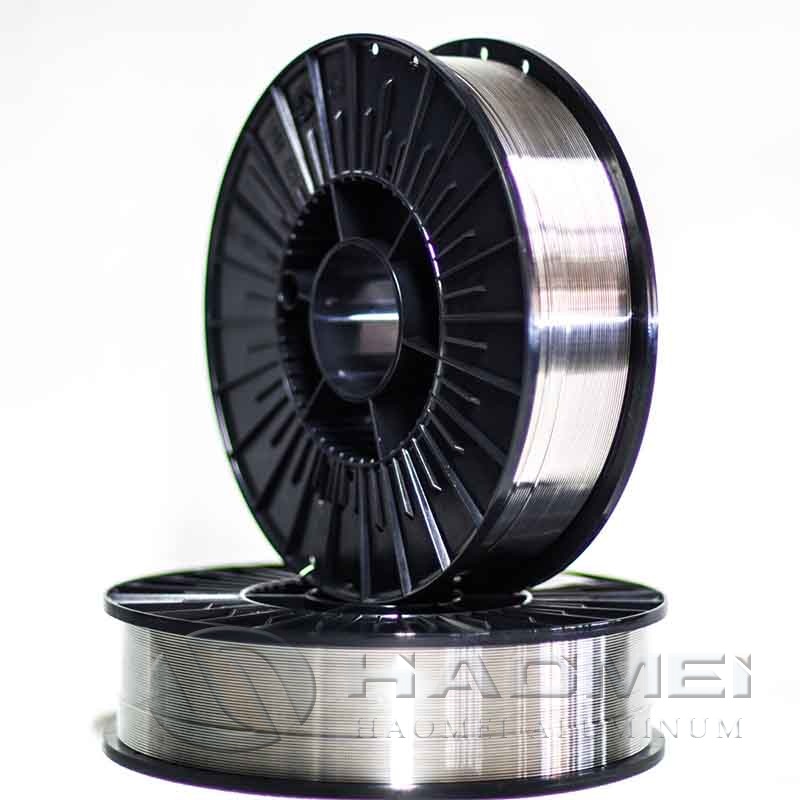
5052 is very weldable by MIG and TIG processes. For many marine jobs, 5356 filler wire is commonly selected because it matches the Al-Mg family and provides good color match after anodizing. 5183 or 5556 may be considered where higher as-welded strength is needed, especially when the design or standard allows it.
The welded zone will not keep the exact H32 or H34 cold-worked strength. Heat softens the area near the weld, so design calculations should use appropriate as-welded values. This is one reason qualified welding procedures matter more than raw parent-metal strength. Clean oxide removal, dry shielding gas, correct joint fit-up, and controlled heat input all affect final performance.
For procurement teams ordering sheet and consumables together, matching plate certificates with suitable Alu Welding Wire helps reduce production delays. If the assembly includes aluminum pipe fittings, elbows, reducers, or transition joints near stainless steel piping, the design should also account for galvanic separation and compatible sealing.
5. Which temper of 5052 is best for bending, forming, and marine sheet fabrication?
For deep forming and tight bending, 5052-O is the most forgiving because it is annealed and has the highest ductility. For general sheet fabrication where the part needs better strength after bending, 5052-H32 is a common choice. 5052-H34 is stronger than H32, but bend radius requirements become more demanding.
A frequent mistake is judging bendability only by alloy name. Thickness, grain direction, inside bend radius, tooling condition, and surface finish all matter. A 2 mm sheet may bend easily in H32, while a thicker plate in H34 may crack if forced over a small radius. For visible marine panels, request protective film or careful packaging to reduce scratches before forming.
| Fabrication need | Suggested 5052 temper | Comment |
|---|---|---|
| Deep drawing or complex curves | O | Best ductility, lower strength |
| General marine sheet bending | H32 | Balanced strength and formability |
| Panels needing extra stiffness | H34 | Larger bend radius may be needed |
| Welded tank fabrication | O or H32 | Confirm forming and welding sequence |
| Slip-resistant deck surfaces | H114 or tread temper options | Check plate pattern and certificate |
When ordering al 5052 for marine production, specify alloy, temper, thickness tolerance, width, length, surface condition, certificate requirement, and applicable standard such as ASTM B209 or EN 485. For projects involving seamless stainless steel pipe nearby, state the joining method and insulation plan early, because the aluminum sheet selection is only one part of the full corrosion-control system.