

Fsw Aluminium
FSW aluminium describes aluminium joined by friction stir welding, a solid-state process in which a rotating tool plasticises material below its melting point. For marine fabricators, the principal benefit is reduced weld distortion in wide hull panels and deck structures.
The important sourcing point is simple: friction stir welding is a joining process, not an alloy grade. Material selection, plate temper, panel geometry, welding procedure qualification, and classification documentation must be specified separately.
Main Concern
The highest-risk issue in friction stir welded marine panels is not weld appearance. It is whether the welded assembly retains adequate corrosion resistance, fatigue performance, dimensional stability, and traceable approval documentation for its service condition.
Conventional fusion welding can introduce substantial heat input, melting, shrinkage, and angular distortion. Friction stir joining generally lowers heat input and avoids solidification defects such as hot cracking and porosity associated with fusion weld metal. However, poor parameter control can create tunnel defects, kissing bonds, lack of penetration, excessive flash, or root flaws that are difficult to identify through visual inspection alone.
Alloy Choice
For seawater-exposed hulls, 5xxx series magnesium alloys remain the normal material family. Common examples include 5083-H116/H321, 5086-H116/H321, 5383-H116, and 5456-H116/H321. Their suitability depends on product thickness, design stress, service temperature, and class requirements.
| Material | Typical Marine Use | FSW Consideration | Corrosion Note |
|---|---|---|---|
| 5083-H116/H321 | Hull plating, decks, tank boundaries | Widely used for friction stir panels | Strong seawater track record when correctly specified |
| 5383-H116 | High-strength hull structures | Can reduce plate weight at equivalent design strength | Confirm class approval and corrosion requirements |
| 5086-H116/H321 | Smaller vessels, superstructures | Good formability and weldability | Often selected where forming is important |
| 6082-T6 | Extrusions, frames, internal structure | Strength falls in the heat-affected zone with fusion welding; FSW response needs qualification | Protect from galvanic coupling with 5xxx plate and steel fittings |
Do not substitute temper freely. H116 and H321 tempers are specifically associated with improved resistance to exfoliation corrosion for certain 5xxx marine products. ASTM B928/B928M covers high-magnesium 5xxx sheet and plate intended for marine service and includes requirements related to corrosion resistance. EN 485 and EN 10204 documentation may also be required where European projects apply.
For panel construction, specify Aluminum FSW Plate by alloy, temper, thickness tolerance, width, panel layout, and weld path. A plate label alone does not demonstrate that the completed panel is acceptable.
Process Controls
A reliable purchasing specification should require a documented welding procedure specification, or WPS, supported by qualification testing appropriate to the vessel, class society, and contract.
Use this process-control checklist:
- Define plate alloy, temper, thickness range, and rolling direction.
- State joint type: butt, lap, T-joint, or tailored-thickness transition.
- Fix minimum root support and backing arrangements where applicable.
- Qualify tool shoulder, probe geometry, rotation speed, travel speed, tilt angle, and plunge depth.
- Set maximum permitted flash removal and minimum finished panel thickness.
- Confirm non-destructive examination methods and acceptance criteria before production.
- Produce representative macrosections from start, middle, and end positions of qualification welds.
- Retain traceability from parent plate heat number through panel serial number.
ISO 25239 is the principal international standard series for friction stir welding of aluminium. It covers terminology, design, quality and inspection requirements, qualification of welding procedures, and operator qualification. The applicable part and acceptance level should be named in the purchase order rather than simply stating "ISO 25239 compliant."
Inspection Plan
Visual inspection alone cannot confirm internal bond integrity. Inspection needs to reflect the joint geometry and consequence of failure.
| Control Point | Recommended Evidence | Problem Prevented |
|---|---|---|
| Incoming plate | Mill test certificate, alloy/temper verification, dimensions | Wrong temper, mixed heats, thickness variance |
| Parameter setup | Recorded machine settings and tool identification | Unrepeatable weld quality |
| First-off panel | Macrosection and dimensional survey | Root flaw, tunnel defect, excessive thinning |
| Production weld | Visual examination plus approved NDT method | Surface flaws and selected internal discontinuities |
| Final panel | Flatness map, weld location record, traceability pack | Fit-up delays and incomplete documentation |
Ultrasonic testing can be effective for suitable friction stir butt joints, but probe selection, calibration blocks, scanning direction, and acceptance thresholds must be validated for the exact panel configuration. Macro examination remains especially useful for confirming nugget shape, root penetration, and oxide disruption during procedure qualification.
Marine Compliance
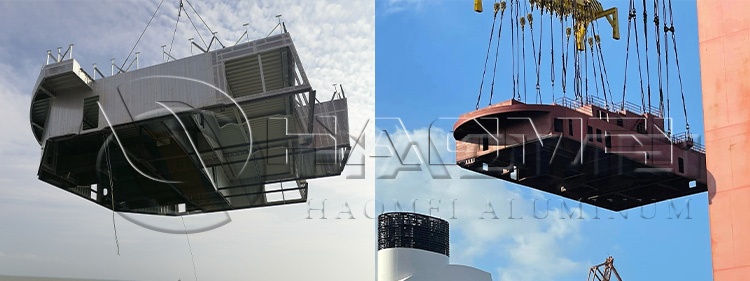
Classification requirements are project-specific. DNV, Lloyd's Register, ABS, Bureau Veritas, and ClassNK each publish rules governing aluminium structures, approved materials, fabrication, welding, and survey. Confirm the vessel's assigned class before releasing material because acceptance of a plate producer or welding workshop under one class society does not automatically transfer to another project.
For commercial marine structures, request these documents at minimum:
- EN 10204 Type 3.1 inspection certificate, when contractually required.
- Material producer approval recognized by the required class society.
- Plate chemical composition and mechanical test results.
- Welding procedure qualification record and production welding log.
- Operator qualification evidence under the applicable ISO 25239 requirements.
- NDT reports, macrosection reports, repair records, and final dimensional inspection.
Where aluminium panels connect to seamless stainless steel pipe supports, valves, or brackets, address galvanic corrosion during design. Aluminium is anodic to common stainless steels in seawater. Use electrical isolation, controlled drainage, suitable non-absorbent gaskets, compatible fasteners, and coating systems. Avoid crevices that retain seawater between dissimilar metals.
Cost Structure
Panel cost should be assessed as a delivered, qualified assembly rather than as a plate price per kilogram. The major cost elements are:
| Cost Element | What Changes It | Commercial Impact |
|---|---|---|
| Aluminium plate | LME aluminium value, regional premium, alloy conversion, thickness | Usually the largest material component |
| Friction stir time | Panel length, joint count, tool life, machine capacity | Drives conversion cost |
| Tooling and fixtures | Panel width, stiffener layout, tolerances | Significant for new geometries |
| Inspection | Class witness points, NDT scope, destructive testing | Essential for regulated structures |
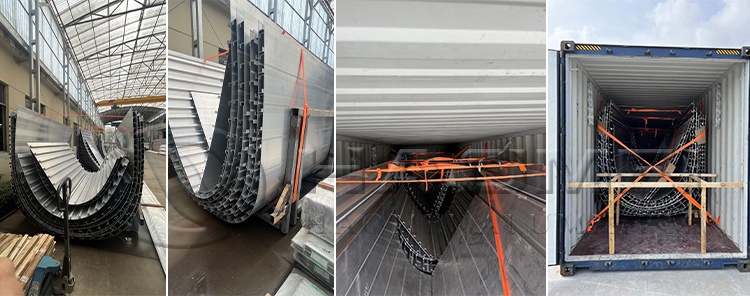
| Logistics | Panel dimensions, export packing, transport route | Large panels can raise freight and handling cost |
Do not compare a friction stir panel only with the price of unwelded plate. Compare installed cost: cutting, fit-up, welding, straightening, rework, inspection, paint preparation, and schedule risk. FSW can be economically favorable where long straight seams and repeatable panel geometries reduce distortion correction and downstream assembly time.
Supply Checks
Before placing an order, verify that the producer has capacity for the required plate width and can maintain consistent rolling direction and temper across all panels. Marine plate supply can tighten when shipbuilding, LNG infrastructure, defense programs, and transport markets compete for 5xxx rolling capacity.
Use this release checklist:
- Confirm alloy and temper against structural drawings.
- Match plate certificates to class and vessel requirements.
- Approve the FSW procedure before serial production.
- Define dimensional tolerances for flatness, camber, and weld location.
- Set hold points for first article inspection and class survey.
- Require corrosion-isolation details at stainless steel interfaces.
- Price material, conversion, testing, packaging, and freight as separate line items.
A controlled specification built around alloy, procedure qualification, inspection evidence, and class documentation prevents the most expensive marine-panel failures: rejected structures, distortion-driven rework, corrosion at interfaces, and missing certification.