

Aluminum Welding Wire
Marine fabricators usually have one main concern when sourcing aluminum welding wire: will the filler alloy produce welds that meet strength, corrosion, and inspection requirements without creating rework? The answer depends on matching the wire to the base metal, procedure, storage control, and certification package.
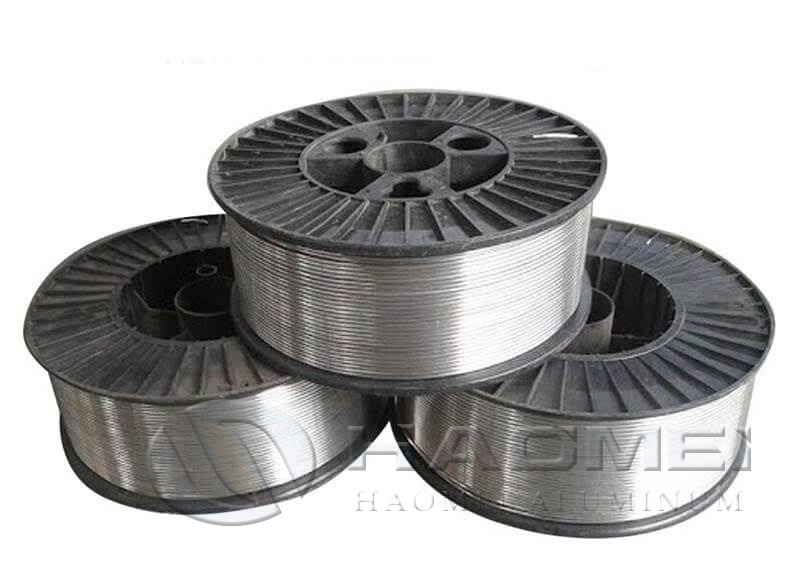
Standards that should appear on the purchase specification
For aluminum filler metals, use recognized filler standards rather than supplier descriptions alone.
| Requirement | Standard or reference | What to verify |
|---|---|---|
| Aluminum and aluminum-alloy bare welding electrodes and rods | AWS A5.10/A5.10M | ER alloy designation, chemistry limits, packaging, identification |
| International filler classification | ISO 18273 | Al filler metal symbols and chemical composition |
| Aluminum welding workmanship | AWS D1.2/D1.2M | Procedure qualification, welder qualification, acceptance criteria |
| Procedure qualification for pressure or piping work | ASME BPVC Section IX | PQR, WPS, tensile and bend test requirements where applicable |
| Marine class projects | ABS, DNV, LR, BV rules as applicable | Approved WPS, consumable traceability, inspection records |
| Marine aluminum plate compatibility | ASTM B928/B928M | 5xxx marine plate chemistry and corrosion-related requirements |
If the same project includes seamless stainless steel pipe, do not mix documentation systems. Stainless pipe normally references ASTM A312/A312M for seamless and welded austenitic pipe, ASTM A213/A213M for boiler and heat-exchanger tube, or EN 10216-5 for seamless stainless pressure tube. These standards do not qualify aluminum filler; they belong in a separate material control plan.
Filler alloy comparison for marine aluminum work
Most marine structures use 5xxx and 6xxx aluminum alloys. The filler must control hot cracking, strength, color after anodizing, and corrosion behavior.
| Filler alloy | Typical use | Advantages | Procurement caution |
|---|---|---|---|
| ER4043 | 6xxx extrusions, general fabrication | Good fluidity, lower cracking sensitivity due to silicon | Lower ductility than Mg fillers; poor anodized color match |
| ER4943 | 6xxx alloys where higher as-welded strength is needed | Similar usability to 4043 with improved strength in many applications | Confirm acceptance in WPS and customer specification |
| ER5356 | 5xxx and 6xxx marine parts | Good strength, good color match after anodizing | Not recommended for sustained service above about 65 °C because Al-Mg alloys with over 3% Mg may be susceptible to stress corrosion cracking |
| ER5183 | 5083, 5086, high-strength marine plate | Higher tensile performance than 5356 on many 5xxx alloys | Requires tight control of procedure and heat input |
| ER5556 | High-strength 5xxx structures | High weld strength for selected 5xxx alloys | Confirm classification society acceptance before ordering |
For hull plate such as 5083 or 5086, ER5183 or ER5356 is commonly specified. For 6061-T6 frames or profiles, ER4043, ER4943, or ER5356 may be used depending on strength, crack resistance, and finishing needs. Do not select filler by diameter and price alone.
When ordering Alu Welding Wire for marine fabrication, state the base alloy, temper, welding process, position, classification requirement, and whether the weld will be painted, anodized, or left bare in seawater exposure.
Inspection and testing before production release
Large-volume purchasing should include a receiving inspection plan. The following checks reduce porosity, feeding failure, and certificate disputes.
Certificate review
Require a mill test certificate or certificate of conformity showing:
- AWS A5.10/A5.10M or ISO 18273 classification.
- Heat or batch number.
- Chemical composition with Mg, Si, Mn, Fe, Cu, Zn, Ti limits as applicable.
- Wire diameter and tolerance.
- Net weight, spool type, and manufacturing date.
- Traceability from carton to spool.
Physical checks
| Check | Practical method | Why it matters |
|---|---|---|
| Diameter consistency | Micrometer readings at several points | Prevents feeding instability and burnback |
| Cast and helix | Let a wire loop fall on a clean flat surface | Poor cast causes wandering arc and contact-tip wear |
| Surface cleanliness | Visual check under good lighting; wipe test | Oil, oxide, and dust increase hydrogen porosity |
| Spool winding | Check for cross winding, crushed flanges, loose layers | Avoids nesting and stoppages during robotic or long welds |
| Packaging seal | Inspect vacuum bag, desiccant, carton damage | Moisture control is essential for aluminum welding |
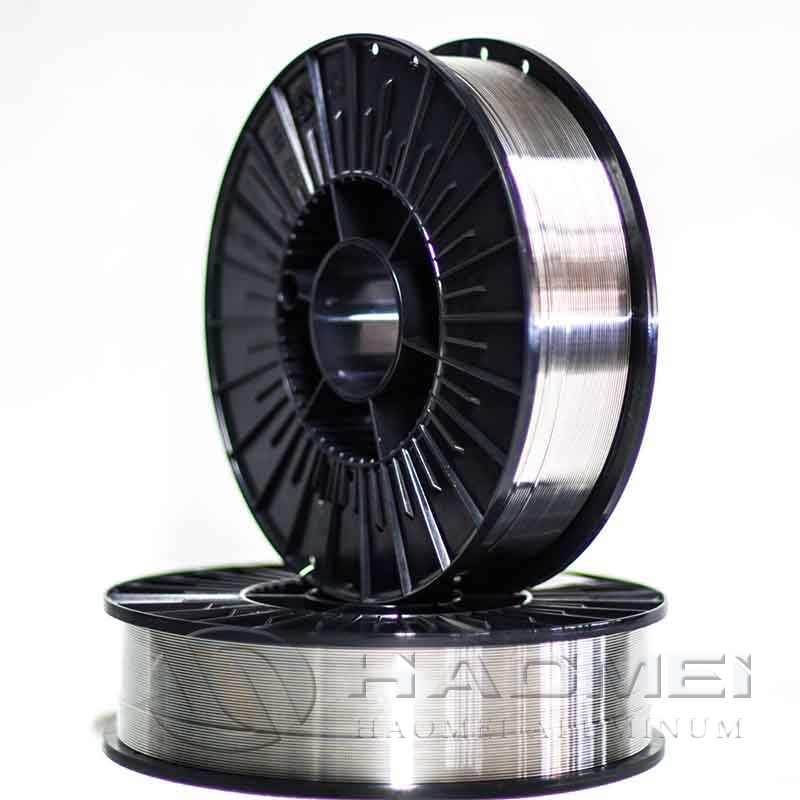
Weld qualification tests
For a new supplier, qualify the consumable on the actual base metal and welding equipment. Typical tests include visual inspection, macroetch, bend testing, tensile testing where required, and radiographic or ultrasonic examination for critical joints. Acceptance criteria should come from AWS D1.2, ASME Section IX, or the project classification rules.
Salt spray testing under ASTM B117 can compare coatings or surface conditions, but it is not a direct prediction of seawater service life. For 5xxx marine alloys, corrosion evaluation may involve ASTM G66 for exfoliation susceptibility or ASTM G67 for nitric acid mass loss, depending on base metal and project requirements.
Selection steps for procurement teams
- Identify the base aluminum alloy: 5083, 5086, 5052, 6061, 6082, or another grade.
- Confirm service condition: seawater splash, immersion, deck equipment, fuel tank, pressure component, or interior structure.
- Choose candidate filler alloys using AWS A5.10 and the WPS history.
- Check temperature exposure. Avoid Mg-rich fillers such as ER5356 in sustained high-temperature service around 65 °C or above unless engineering approval is documented.
- Confirm welding process: MIG, pulsed MIG, automated MIG, or TIG rod.
- Specify diameter: common MIG sizes include 0.8 mm, 1.0 mm, 1.2 mm, and 1.6 mm; TIG rods are often ordered as straight cut lengths.
- Require trial welding on production equipment before full release.
- Lock the approved batch traceability system in the purchase order.
Sourcing requirements to put in the purchase order
A complete order line should read like a technical requirement, not a commodity label.
| Purchase item | Recommended wording |
|---|---|
| Product | Aluminum alloy bare welding wire, AWS A5.10 ER5183, ISO 18273 equivalent if required |
| Diameter | 1.2 mm, tolerance per applicable standard |
| Packaging | Sealed spool, desiccant, moisture-resistant carton, batch label on spool and carton |
| Documents | Certificate of conformity, chemical analysis, batch traceability, SDS |
| Trial condition | Supplier batch accepted only after weld procedure trial and porosity check |
| Logistics | Dry container loading, carton protection, no mixed chemical products in same pallet area |
For pricing control, avoid unsupported fixed assumptions. Aluminum consumable prices generally move with aluminum alloy raw material, conversion cost, spool weight, freight, and currency. A transparent offer can reference a public aluminum index, such as the LME aluminum cash settlement, plus a stated processing premium. Magnesium- and silicon-bearing fillers may have different surcharge behavior, so compare total delivered cost per usable kilogram, not carton price.
Storage and shop use controls
Aluminum wire oxidizes naturally and absorbs surface contamination easily. Good storage is often the difference between stable production and repeated porosity repairs.
- Store sealed spools indoors at stable temperature and low humidity.
- Bring cold spools to shop temperature before opening to avoid condensation.
- Keep opened spools covered when not in use.
- Do not use compressed air that may contain oil or water to clean wire.
- Use U-groove drive rolls, clean liners, and correct contact tips for aluminum.
- Separate aluminum wire storage from carbon steel grinding dust.
- Record spool batch number against the welded structure or work order.
Comparison with adjacent marine materials
| Material being purchased | Main standard concern | Common risk if treated incorrectly |
|---|---|---|
| Marine aluminum sheet or plate | ASTM B928, EN 485, class rules | Wrong temper or unsuitable corrosion performance |
| Aluminum profile | EN 755, ASTM B221, project drawing tolerance | Poor fit-up and excess weld distortion |
| Aluminum filler wire | AWS A5.10, ISO 18273, WPS approval | Porosity, hot cracking, low weld strength |
| Pipe fittings | ASME B16.9, ASTM material grade | Pressure rating mismatch |
| Seamless stainless steel pipe | ASTM A312/A213 or EN 10216-5 | Wrong grade, missing heat treatment, incomplete PMI |
Receiving checklist
- Classification matches AWS A5.10 or ISO 18273.
- Alloy grade matches the approved WPS.
- Batch number appears on spool, carton, and certificate.
- Packaging is dry, sealed, and undamaged.
- Wire feeds smoothly in a short production simulation.
- Trial weld passes visual and required NDT.
- Storage date, opening date, and operator are recorded.