

Aluminum Sheet for Boat Floor
Aluminum sheet for boat floor: what purchasing teams should check first
For a boat floor, the main concern is usually not tensile strength alone. It is the combination of corrosion resistance, panel stiffness, slip resistance, weldability, and long-term appearance in a wet chloride environment.
In practice, most specification errors come from ordering a non-marine alloy, choosing thickness by price instead of span, or using decorative tread plate without checking actual slip performance and corrosion condition after fabrication.
Applicable standards and what they actually control
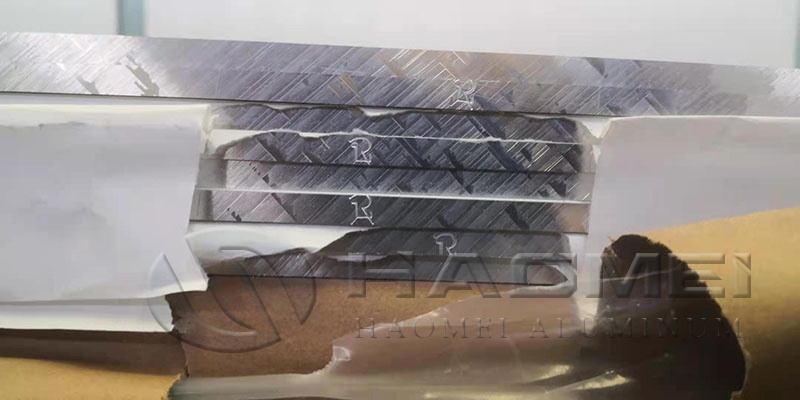
For marine flooring plates, the most relevant framework is the aluminum alloy product standard plus classification society approval where required by the vessel project.
Common standards used in marine projects
| Item | Common reference | What it covers |
|---|---|---|
| Wrought aluminum chemical composition | EN 573 / ASTM B209 alloy definitions | Alloy limits such as Mg, Mn, Cr |
| Sheet and plate supply condition | ASTM B209 / EN 485 | Temper, dimensions, tolerances, mechanical properties |
| Marine classification approval | DNV, Lloyd's Register, ABS, Bureau Veritas rules | Approval for marine use and traceability |
| Slip resistance testing | Project-specific requirement, often based on pendulum or ramp methods | Wet traction performance |
| Corrosion testing | ASTM B117 salt spray is common for comparison, not direct life prediction | Surface/coating comparison only |
For structural or deck-adjacent flooring, classification approval can matter more than a generic mill certificate. If the floor is part of a classed vessel package, ask whether the material needs society-recognized documentation before issuing the PO.
Which alloy is normally selected
Marine floors are commonly made from 5xxx series aluminum because these Al-Mg alloys have good seawater corrosion resistance and are widely used in hull and deck structures.
The most common options are below.
| Alloy | Typical use in boat flooring | Strength level | Weldability | Notes |
|---|---|---|---|---|
| 5052 | Light-duty covers, interior floor panels | Medium | Good | Easier forming, lower strength than 5083/5086 |
| 5083 | Workboat decks, floor panels with higher corrosion demand | High | Excellent | Widely accepted marine alloy |
| 5086 | Decks, gangways, flooring requiring good strength and weldability | High | Excellent | Common North American marine choice |
| 5754 | General marine sheet in some markets | Medium | Good | Good corrosion resistance, moderate strength |
If the flooring is welded into the structure, 5083 aluminum plate and 5086 aluminum plate are the usual benchmark grades to compare first.
Avoid this common substitution
Do not assume any tread plate is suitable for marine flooring. Many patterned sheets sold for vehicle or architectural use are 1xxx or 3xxx based products with lower strength and less suitable marine service performance.
Ask for the exact alloy and temper, not just "5 bar plate" or "checker plate".
Surface pattern: traction is useful, but alloy still comes first
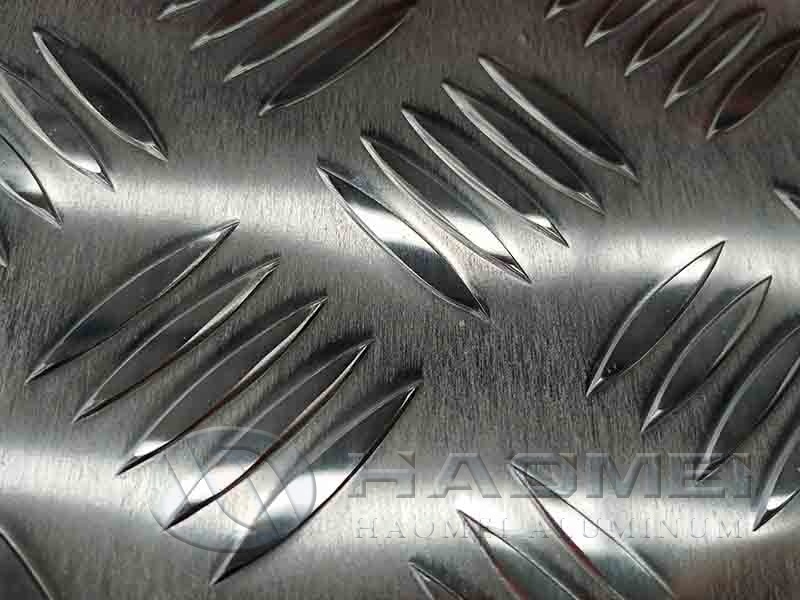
Boat floors often use plain sheet with added anti-slip treatment, or patterned plate such as 5 bar tread plate.
The pattern helps drainage and foot grip, but it does not replace proper alloy selection.
Plain sheet vs tread plate
| Option | Best for | Advantages | Watch points |
|---|---|---|---|
| Plain marine sheet | Welded floors, coated systems, machined fit-out | Easier fabrication, easier cleaning | May need anti-slip coating or embossing |
| 5 bar tread plate | Walkways, removable floor panels, utility boats | Ready-made textured surface | Check actual alloy, top-surface wear, cleanability |
If personnel safety is part of the specification, request a defined wet slip-resistance requirement from the project engineer or end user. Surface pattern alone is not a verified slip rating.
Thickness selection: use span and support spacing, not habit
A floor panel fails commercially long before it fails mechanically. Excessive deflection causes noise, poor fit, coating damage, and complaints from operators.
Typical purchasing inputs should include:
- Clear span between supports
- Support spacing and direction
- Uniform load and point load
- Whether people, equipment, or batteries will sit on the panel
- Whether the plate is welded, bolted, or removable
- Surface pattern and permitted deflection
Practical starting points for inquiries
| Application type | Common thickness range seen in projects | Notes |
|---|---|---|
| Light removable floor panels | 2.5 mm to 4 mm | Usually needs close support spacing |
| General utility boat flooring | 4 mm to 6 mm | Common range for tread plate panels |
| Heavier-duty deck or machinery access area | 6 mm and above | Confirm load case and deflection criteria |
These are not design values. Final thickness should be confirmed by the vessel designer or fabricator.
Testing and inspection checklist before order release
Large-volume orders should convert "marine quality" into measurable documents.
Mill and inspection documents to request
| Check item | What to request | Why it matters |
|---|---|---|
| Alloy and temper | Mill test certificate | Confirms exact material supplied |
| Dimensions | Thickness, width, length tolerance report | Prevents nesting and fit-up issues |
| Mechanical properties | Tensile and yield values from MTC | Verifies compliance with supply standard |
| Surface condition | Agreed finish standard and photos | Avoids disputes on scratches and roller marks |
| Traceability | Heat number and bundle marking | Needed for marine project control |
| Classification status | LR, DNV, ABS or project-required approval | Needed for classed vessels |
Additional checks for fabricated flooring
- Flatness after cutting and welding sequence
- Edge quality for safe handling
- Drainage hole finishing
- Isolation from carbon steel contamination
- Compatibility of fasteners and support members
Corrosion performance: where problems usually start
Marine aluminum flooring performs well in seawater service, but corrosion issues still occur when dissimilar metals or trapped salts are ignored.
Common field risks
| Risk | Typical cause | Prevention |
|---|---|---|
| Galvanic corrosion | Stainless or carbon steel contact in wet condition | Use isolating pads, sleeves, sealants |
| Crevice corrosion | Trapped water under overlaps or fittings | Improve drainage and sealing detail |
| Surface contamination | Steel brushing, grinding dust | Use dedicated aluminum tools |
| Coating failure | Poor pretreatment or flexing | Match coating system to service and panel design |
If stainless hardware is used, confirm compatibility at the joint. For related marine piping or drainage interfaces, stainless components should also be specified by grade and corrosion environment, especially in chloride exposure.
Sourcing questions that reduce claim risk
Before placing a high-volume order, ask suppliers these points in writing:
- What is the exact alloy and temper?
- Is the product sheet, plate, or tread plate under ASTM B209 or equivalent?
- Is the material supplied with classification society documentation if required?
- What is the guaranteed thickness tolerance at the ordered width?
- Is the pattern depth consistent across batches?
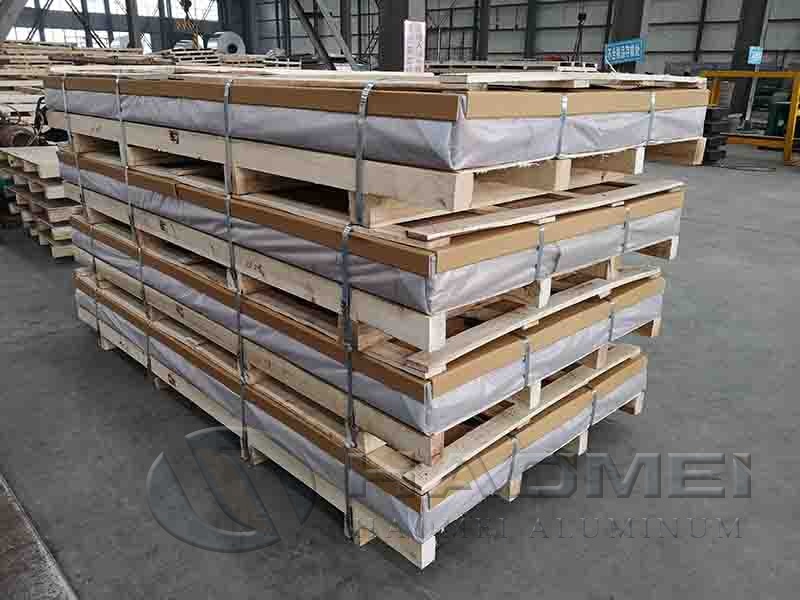
- How will sheets be packed to avoid transit abrasion and moisture staining?
- Has the supplier provided material for welded marine flooring before?
Recommended specification format for RFQs
Use a line format that procurement, QC, and fabrication teams can all read the same way:
| Item | Example entry |
|---|---|
| Product | Marine aluminum tread plate for boat floor |
| Alloy | 5083 or 5086 |
| Temper | H111 / H116 / project-specified temper |
| Standard | ASTM B209 or approved equivalent |
| Size | 5 mm x 1500 mm x 3000 mm |
| Surface | 5 bar pattern, one side bright, free from harmful defects |
| Documents | MTC EN 10204 3.1, heat traceability, class approval if required |
| Packing | Interleaved, seaworthy export packing |
For many vessel flooring projects, the strongest commercial result comes from specifying marine 5xxx alloy, checking support span before fixing thickness, and requiring traceable mill documentation instead of ordering generic checker plate by appearance alone.