

Aluminum Friction Stir Welding Plate
Year-end holiday shutdowns can create a narrow installation window for vessel repairs, deck-house fabrication, and lightweight marine modules. For marine fabricators, the recurring risk is not simply material availability. It is receiving welded aluminum panels that require extensive straightening before cutting, fitting, or assembly.
An aluminum friction stir welding plate addresses that specific concern: low distortion across welded panel assemblies. Friction stir welding, or FSW, is a solid-state joining process. A rotating tool produces heat through friction and plastic deformation, joining material without melting the joint in the conventional fusion-welding sense. For wide aluminum panels, that process can reduce the heat-related movement that complicates flatness-sensitive work.
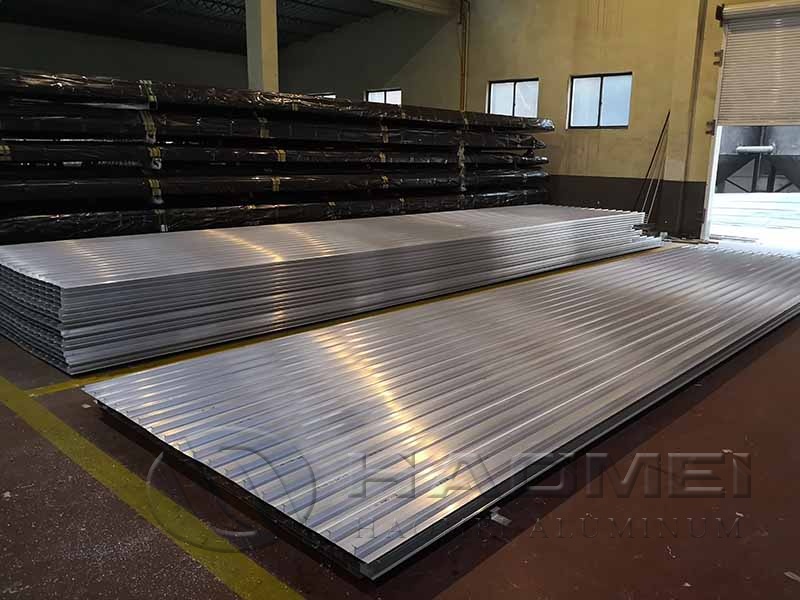
For holiday refit schedules, use this product as a planning solution rather than treating it as a generic sheet purchase. Define the required panel geometry, inspection records, delivery date, and receiving checks before workshops close for Christmas, New Year, or other local public holidays.
Why Low Distortion Matters During Holiday Refit Windows
Conventional fusion welding introduces concentrated heat and solidification effects that can cause angular distortion, buckling, residual stress, and correction work. The actual result depends on alloy, temper, thickness, joint design, restraint, welding sequence, and heat input. FSW does not eliminate distortion automatically, but its lower peak thermal exposure can be advantageous where a flat fabricated panel is required.
This matters when project teams are coordinating marine aluminum sheet, extrusions, filler wire, pipe connections, and stainless piping on the same shutdown schedule. If a welded panel arrives outside the agreed flatness requirement, downstream cutting and assembly may stop while the fabrication team reworks it.
| Holiday-window problem | Effect on marine work | FSW plate planning response |
|---|---|---|
| Limited labor during shutdown | Rework competes with scheduled installation | Specify flatness measurement and acceptance method before production |
| Large welded deck or bulkhead panel | Distortion can affect fit-up to profiles | Confirm panel dimensions, joint orientation, and lifting points |
| Different alloy systems on one project | Wrong material documentation delays release | Request mill test certificates and weld procedure records |
| Overseas transit near public holidays | Missed sailings extend lead time | Set a document-release date before the carrier cutoff |
| On-site welding restrictions | More repair welding adds safety and schedule pressure | Order panels sized for the intended assembly sequence |
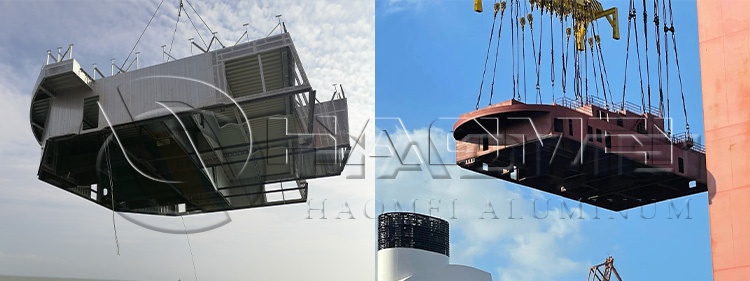
A suitable application may include deck panels, superstructure sections, access platforms, rail-adjacent panels, and fabricated modules where post-weld leveling would affect the schedule. The material still needs to be matched to the vessel design and class requirements. Alloy selection, corrosion environment, thickness, and mechanical-property expectations should be approved by the responsible naval architect, shipyard, or class-related quality process.
For projects that need a ribbed or reinforced format, specify the construction clearly when requesting an Aluminum FSW Plate. State whether the requirement is a butt-welded sheet panel, an integrally stiffened panel, or a plate joined to profiles. These are not interchangeable products.
What to Put on the Purchase Specification
Do not rely on the phrase "marine-grade" alone. It is not a complete technical specification. A workable request should make the low-distortion requirement measurable and traceable.
Use this checklist before placing a holiday-season order:
- Base material: Identify alloy and temper for each component, such as 5xxx or 6xxx series where appropriate to the design. Do not assume properties transfer from parent plate to the welded region.
- Panel configuration: Provide finished length, width, thickness, weld direction, edge preparation, and any machining allowance.
- Flatness definition: State the inspection span, support condition, measuring tool, maximum permitted deviation, and whether values apply before or after cutting.
- Mechanical requirements: Identify required tensile, bend, hardness, or other tests only when supported by the governing drawing or contract.
- Weld qualification evidence: Request the applicable welding procedure specification, procedure qualification evidence where required, and operator qualification records.
- Inspection scope: Define visual examination and any required non-destructive testing. The method and acceptance criteria must be agreed in advance.
- Traceability package: Ask for material certificates, panel identification, inspection report, packing list, and invoice references that match the shipment.
- Packing and logistics: Specify moisture protection, edge protection, pallet or skid design, lifting restrictions, and destination holiday receiving hours.
ISO 25239 covers friction stir welding of aluminium and includes terminology, design of weld joints, qualification of welding operators, and quality and inspection requirements across its parts. It can help teams structure technical discussions, but it does not replace the project specification, flag-state requirements, class rules, or contractual acceptance criteria.
For a comparison point, ISO 25239-1:2020 covers vocabulary, while the remaining parts address design, operator qualification, quality and inspection, and related quality requirements. Confirm the current edition and the contractually applicable standard with the project quality representative before citing it in purchase documents.
A Practical Holiday Delivery Plan
The holiday solution is a controlled handoff: approved drawings before production, complete records before dispatch, and inspection capacity at destination before the shipment arrives. This reduces the chance that a technically acceptable panel becomes a schedule problem.
| Timing | Required action | Evidence to retain |
|---|---|---|
| 6-8 weeks before shutdown | Freeze panel drawing, alloy, temper, and flatness method | Approved drawing revision and purchase specification |
| Before welding starts | Confirm weld joint design and inspection plan | Manufacturing and inspection plan |
| Before dispatch | Review dimensions, visual condition, identification, and records | Inspection report, certificates, packing photos |
| 3-5 days before arrival | Confirm receiving crew, lifting equipment, and dry storage | Delivery appointment and handling plan |
| On receipt | Inspect packaging damage, panel ID, dimensions, and flatness | Receiving inspection record and photographs |
Avoid comparing quotations only by price per kilogram. A lower unit price can lose value if it excludes dimensional inspection, traceability documents, protective packing, or a clearly defined flatness condition. Ask suppliers to separate material cost, welding or fabrication cost, testing, documents, packing, and freight terms. This makes quotations comparable without assuming identical scope.
For marine projects with stainless seamless pipe, fittings, welding consumables, and aluminum panels arriving together, assign one person to reconcile heat numbers, panel marks, and packing lists against the installation schedule. Keep aluminum separated from carbon-steel handling areas where possible to reduce contamination risk, and follow the project's storage and corrosion-control procedures.
A holiday refit can proceed with fewer fitting surprises when low-distortion performance is written into the acceptance process, not left as an informal expectation. Confirm the measurable flatness requirement, required documents, and receiving date before production starts, then release the panel only after the documentation package matches the approved specification.