

Al5052 H32 Material Properties
For marine fabrication, al5052 h32 material properties matter most when the part is exposed to seawater but does not carry primary hull loads. Typical applications include deck lockers, cabinets, small tanks, instrument panels, covers, brackets, and formed enclosures.
The main purchasing concern is simple: do not specify 5052-H32 where 5083-H116, 5086-H116, or class-approved plate is required. 5052-H32 offers good corrosion resistance and formability, but it is not the first choice for welded hull structure.
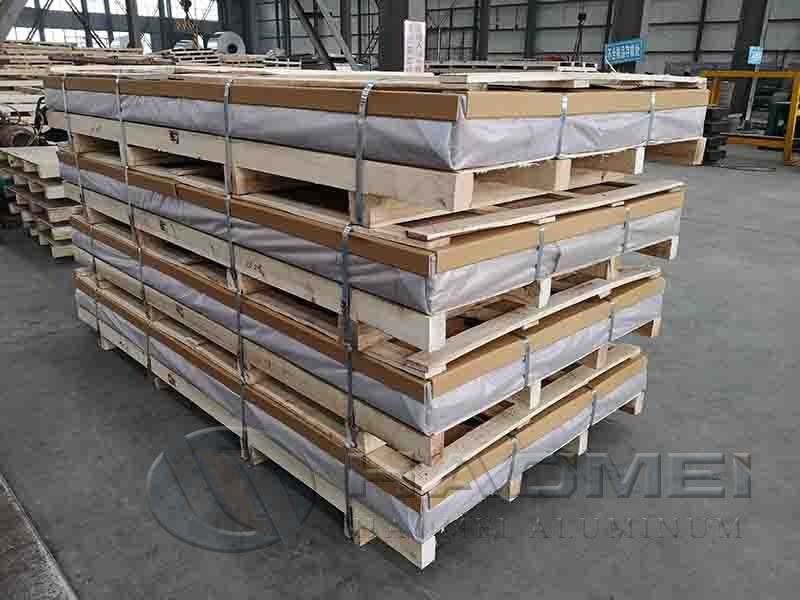
What 5052-H32 means
5052 is a non-heat-treatable aluminum-magnesium alloy. Its strength comes from strain hardening, not solution heat treatment. H32 means strain-hardened and stabilized to a quarter-hard condition.
For purchasing contracts, name the product as 5052-H32 sheet or plate, then state the standard, thickness, width, length, tolerance class, surface finish, and certificate type. For commercial marine sheet, 5052 aluminum plate is usually ordered to ASTM B209/B209M or EN 485, depending on the project region.
Typical property data for 5052-H32
Values below are commonly published engineering values for 5052-H32. Acceptance must follow the ordered standard and the mill test certificate.
| Property | Typical value or range | Purchasing note |
|---|---|---|
| Density | 2.68 g/cm3 | Useful for weight calculation |
| Elastic modulus | About 70 GPa | Similar to other aluminum alloys |
| Ultimate tensile strength | About 215-265 MPa | Thickness and standard affect minimums |
| 0.2% yield strength | About 160 MPa minimum for many sheet sizes | Confirm by certificate |
| Elongation | Commonly 7-12% minimum, thickness dependent | Important for forming |
| Thermal conductivity | About 138 W/m-K | Typical engineering value |
| Melting range | About 607-649 C | Do not use for service temperature rating |
| Corrosion behavior | Good in marine atmosphere | Avoid crevices and trapped chlorides |
Standards to put on the purchase order
Use standards that define chemistry, mechanical properties, dimensions, and testing. Do not rely on alloy name alone.
| Requirement | Common reference | What to verify |
|---|---|---|
| Sheet and plate supply | ASTM B209/B209M | Alloy 5052, H32 temper, dimensions, tensile properties |
| European supply | EN 485-2 and EN 485-4 | Mechanical properties and tolerances |
| Chemical analysis | ASTM B209/B209M or EN 573 | Mg and Cr content are within alloy limits |
| Tensile testing | ASTM E8/E8M or EN ISO 6892-1 | Yield, tensile strength, elongation |
| Bend testing, if required | ASTM E290 or project specification | Forming reliability for covers and brackets |
| Certificates | EN 10204 3.1 is commonly requested | Heat number, batch traceability, test results |
For 5052 chemistry, the aluminum alloy designation normally includes magnesium around 2.2-2.8% and chromium around 0.15-0.35%, with limits on Si, Fe, Cu, Mn, and Zn. These limits come from recognized aluminum product standards and should appear in the chemical section of the mill certificate.
5052-H32 versus 5083 and 5086 for marine work
The wrong alloy selection can create rework, class approval delays, or overweight structures. Use the comparison below before issuing a volume RFQ.
| Alloy and temper | Relative strength | Corrosion resistance | Welded structure suitability | Best-fit marine use |
|---|---|---|---|---|
| 5052-H32 | Medium | Good | Limited for primary welded structure | Cabinets, panels, covers, tanks, light brackets |
| 5083-H116 or H321 | Higher | Very good | Common for hulls and heavy marine plate | Hull plating, decks, structural members |
| 5086-H116 or H321 | Higher than 5052 | Very good | Common for marine welded structures | Workboats, decks, superstructures |
If the drawing calls for hull plating, pressure-bearing marine tanks, or class-reviewed welded members, review 5083 or 5086 instead of substituting 5052. For higher-strength welded marine plate, many fabricators evaluate 5083 aluminum plate with H116 or H321 temper.
Welding performance and filler selection
5052 welds well by GTAW or GMAW, but the heat-affected zone loses part of the H32 strain-hardened strength. Design calculations should use as-welded properties, not the original H32 sheet strength near the weld.
Common filler choices include ER5356 for 5052-to-5052 and many 5xxx applications. For mixed structures involving 5083, ER5183 may be considered where the welding procedure requires higher weld metal strength. Confirm filler selection with AWS D1.2, vessel rules, or the project welding procedure specification.
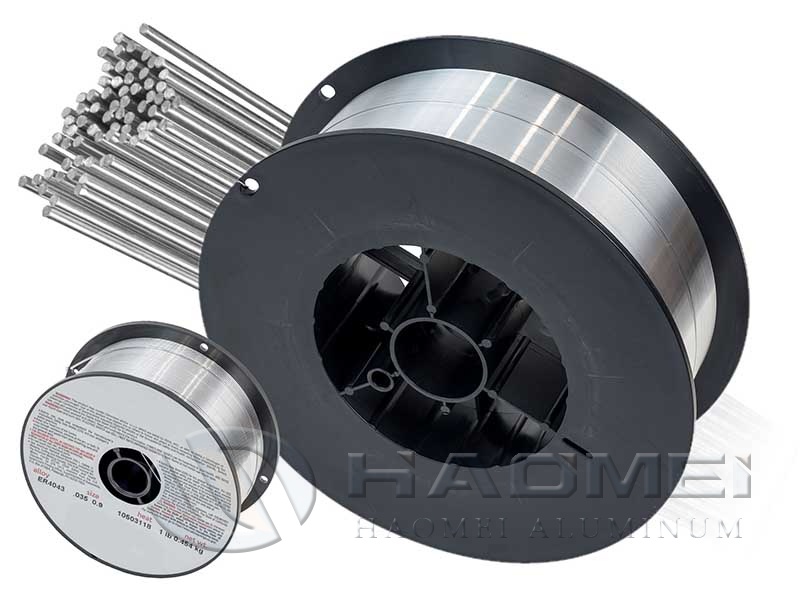
When ordering welding consumables, match traceability requirements for the sheet. For repeat production, specify wire diameter, AWS classification, shielding gas, spool packaging, and certificate. Alu Welding Wire should be stored dry and segregated by alloy to prevent wrong-filler use on the shop floor.
Testing checklist before shipment release
Use this inspection list when receiving multiple coils, sheets, or cut plates from different heats.
- Confirm alloy and temper: certificate must state 5052-H32, not 5052-O, 5052-H34, or a commercial substitute.
- Match heat numbers: every pallet or bundle should trace to the certificate.
- Check tensile results: yield, tensile strength, and elongation must meet the ordered standard for the thickness.
- Check thickness tolerance: measure edges and center positions, especially for CNC nesting.
- Inspect surface: reject heavy scratches, water stains, pitting, oil contamination, and transit abrasion if appearance or coating adhesion matters.
- Verify flatness: specify tolerance if panels are used for laser cutting, folding, or visible doors.
- Confirm packaging: seaworthy packing, waterproof paper, desiccant, edge protection, and clear bundle labels reduce arrival damage.
Salt spray testing under ASTM B117 can compare coatings or surface treatments, but it is not a direct prediction of seawater service life. For bare aluminum sheet, design details such as drainage, crevice avoidance, and galvanic isolation often matter more than a salt spray hour claim.
Interface with seamless stainless steel pipe systems
Marine aluminum panels often sit near stainless piping. If seamless stainless steel pipe is part of the same package, common standards include ASTM A312 for process piping and ASTM A213 for boiler, heat exchanger, or tubing applications.
Do not allow direct wet contact between 5052 aluminum and stainless steel in seawater. Stainless is more noble and can accelerate galvanic attack on aluminum. Use insulating gaskets, sleeves, non-conductive washers, sealants, and drainage gaps. Also separate aluminum swarf from stainless pipe fabrication areas to reduce embedded contamination before coating.
RFQ details that prevent disputes
For large-volume purchasing, write the RFQ in measurable terms:
| RFQ item | Recommended wording |
|---|---|
| Product | Aluminum sheet or plate, alloy 5052, temper H32 |
| Standard | ASTM B209/B209M or EN 485-2 and EN 485-4 |
| Size | Thickness x width x length, with tolerance class |
| Surface | Mill finish, PVC film, brushed finish, or coating-ready surface |
| Certificate | EN 10204 3.1 or agreed mill certificate format |
| Inspection | Dimensional report, tensile test data, chemical analysis |
| Packaging | Export seaworthy packing with pallet weight limit |
| Pricing basis | LME aluminum reference plus conversion premium, thickness premium, freight, and payment terms |
| Substitution rule | No alloy, temper, or origin substitution without written approval |
A final practical check: if the part will be bent tightly, request bend samples from the same thickness and temper before mass cutting. If the part will be welded heavily, confirm the design accepts softened heat-affected zones. If the part is safety-related or class-reviewed, obtain written approval for 5052-H32 before releasing production material.