

Al 5052 Mechanical Properties
Holiday dry-dock windows are short. Christmas-New Year shutdowns, Lunar New Year factory closures, Eid port schedules and Golden Week carrier congestion can turn a simple marine repair into a delayed sailing. For purchasing teams handling marine aluminum sheet, profiles, welding wire, pipe fittings and seamless stainless steel pipe, the practical question is specific: will Al 5052 deliver enough strength, corrosion resistance and forming reliability without slowing fabrication?
The main concern covered here is strength stability in fast marine fabrication. 5052 is a non-heat-treatable aluminum-magnesium alloy, so its properties come mainly from cold work temper, not post-weld heat treatment. That makes it suitable for formed panels, deck lockers, gangways, fenders, small craft parts, covers, brackets and non-critical marine structures where seawater resistance and bendability matter.
What the verified properties mean in marine work
5052 aluminum is specified in ASTM B209 for sheet and plate, and in EN 485-2 and EN 573-3 for European supply. Chemical composition is defined by the Aluminum Association and standards: magnesium is typically 2.2% to 2.8%, with chromium commonly 0.15% to 0.35%. Density is about 2.68 g/cm3, lower than steel and useful when yards need lighter handling during holiday maintenance.
Mechanical values vary by thickness and temper. Always confirm the mill test certificate, preferably EN 10204 3.1, because the exact minimum value depends on standard edition, gauge and product form.
| 5052 temper | Typical use in marine fabrication | Tensile strength, MPa | Yield strength, MPa | Elongation note |
|---|---|---|---|---|
| O | Deep forming, spun parts, complex bends | about 170-215 | about 65 minimum | Higher ductility, often 12% or more depending thickness |
| H32 | General sheet, covers, lockers, light panels | about 210-260 | about 160 minimum | Balanced strength and bendability |
| H34 | Stiffer formed parts, brackets, panels | about 240-280 | about 180 minimum | Less ductile than H32 |
| H36/H38 | Higher stiffness sheet | about 255-305 | about 200 minimum | Bend radius must be checked before nesting |
For repeatable holiday production, H32 is often the safest starting point. It reduces cracking risk during bending compared with harder tempers, while still giving higher strength than annealed O temper. If drawings include tight bends, request the minimum inside bend radius from the mill or run a first-article bend test before the holiday cutoff.
For stocked sheet programs, 5052 aluminum plate can be paired with cut-to-size service, PVC film, palletized packing and certificate control so crews receive material ready for forming instead of spending holiday labor hours on sorting and surface inspection.
5052 versus other marine aluminum choices
5052 should not be treated as a universal hull alloy. Its advantage is corrosion-resistant formability. For highly loaded hull plates, classification projects and larger vessel structures, 5083 or 5086 are often specified because they provide higher strength. ABS, DNV and other classification societies require approved materials and documented traceability for classed vessels, so the drawing and class rule come before substitution.
| Requirement | 5052-H32 | 5083-H116/H321 | 6061-T6 |
|---|---|---|---|
| Seawater corrosion resistance | Very good for general marine parts | Very good, common for hull structures | Moderate; needs design controls |
| Formability | Strong advantage | Moderate | Lower after T6 temper forming |
| Weld behavior | No heat treatment required after welding for temper recovery | Good marine welding alloy | Welded heat-affected zone loses T6 strength |
| Typical marine role | Covers, fenders, lockers, light structures | Hulls, decks, high-load plates | Machined parts, frames, fittings |
| Holiday repair fit | Fast forming and replacement panels | Stronger structural replacement | Use when extrusion or machining need dominates |
When the part is structural, compare design stress, weld location and class requirement before selecting. If the job calls for higher marine plate strength, 5083 aluminum plate is usually the comparison material to review with engineering.
Holiday stocking plan for fewer fabrication delays
A holiday solution is not only the alloy. It is the combination of temper, dimensions, packaging, welding consumables and delivery timing. Use the following steps 6 to 10 weeks before Christmas-New Year or Lunar New Year, and 4 to 6 weeks before regional holiday shutdowns.
| Step | Action | Why it prevents holiday delays |
|---|---|---|
| 1 | Freeze temper: O, H32, H34 or harder | Prevents bend failure caused by last-minute substitution |
| 2 | Confirm standard: ASTM B209 or EN 485-2 | Aligns inspection, certificates and acceptance rules |
| 3 | Set thickness tolerance and flatness needs | Reduces rework for panels, covers and CNC-cut parts |
| 4 | Match filler wire before shipment | Avoids welding stoppage when ports or warehouses close |
| 5 | Pack by work order or vessel name | Saves sorting time during short dry-dock windows |
| 6 | Reserve space before carrier blank sailings | Protects ETA during peak retail shipping seasons |
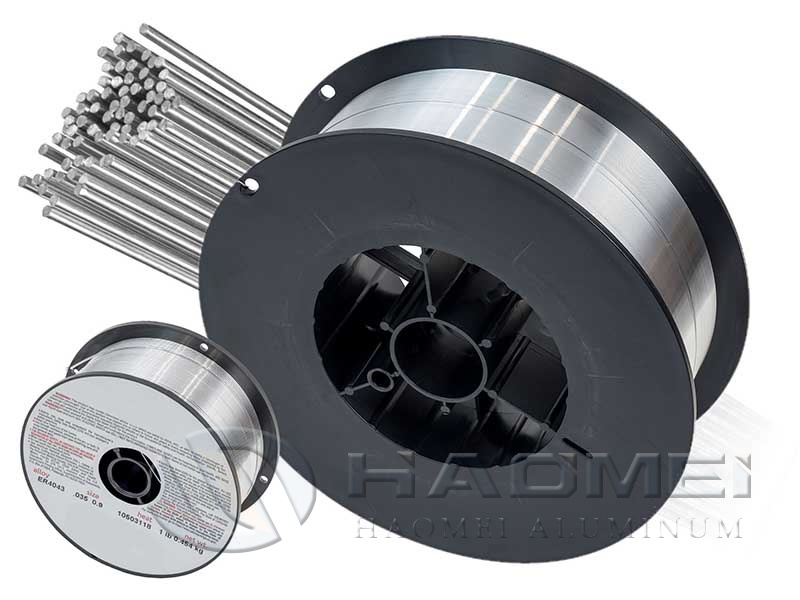
For welding, 5052 is commonly welded with 5356 filler under AWS A5.10 practice; 5183 may be selected when the welded joint specification requires higher deposited weld strength. Welding procedure qualification should follow AWS D1.2 for aluminum structures when applicable. Do not mix stainless pipe supports and aluminum sheet directly in wet zones without isolation, because galvanic corrosion risk increases when dissimilar metals touch in seawater.
Inspection checklist for incoming 5052 marine sheet
Match alloy and temper against the purchase order and drawing.
Check mill test certificate for heat number, chemical composition and mechanical properties.
Verify thickness, width, length, diagonal tolerance and surface condition.
Inspect PVC film, interleaving paper, edge protection and pallet marks.
Confirm no water staining, transit abrasion or mixed tempers in the same bundle.
For bent parts, run a sample bend in the same direction planned for production.
For welded parts, confirm filler wire grade, diameter, batch number and storage condition.
Pricing should be handled with a transparent formula rather than a fixed seasonal guess. Use the public LME aluminum price as the metal reference, then add alloy conversion, temper processing, thickness premium, cutting, packaging, certification, inland freight and ocean freight. Holiday seasons can raise logistics cost through container tightness and blank sailings, so quote validity and shipment week should be written into the order.
Fast selection rules for 5052 holiday orders
| If the project needs... | Specify this first | Avoid this mistake |
|---|---|---|
| Tight bends and visible surfaces | 5052-O or 5052-H32 with film protection | Ordering H38 without bend trial |
| Stiffer light panels | 5052-H34 with flatness requirement | Ignoring springback allowance |
| Saltwater-exposed covers or lockers | 5052-H32 plus drainage design | Trapping water under stainless fasteners |
| Welded marine assemblies | 5052 sheet plus matched 5356 or 5183 wire | Shipping sheet without filler metal |
| Classed vessel structural repair | Engineering review for 5083/5086 and class approval | Replacing structural plate by alloy name alone |
Send the drawing, required standard, temper, thickness range, surface requirement, certificate type, cutting list and target holiday arrival date in one package. That allows sheet, profiles, welding wire, fittings and pipe materials to be planned as one repair set instead of separate shipments competing for limited seasonal freight space.