

5083 Tooling Plate
5083 Tooling Plate Questions Frequently Raised in Current Q&A Searches
Recent English-language searches and industry discussions commonly focus on whether 5083 tooling plate can hold tolerance, resist corrosion, machine cleanly, and replace other aluminum grades. These questions matter to fabricators producing marine fixtures, welding jigs, inspection tables, structural components, and corrosion-exposed equipment.
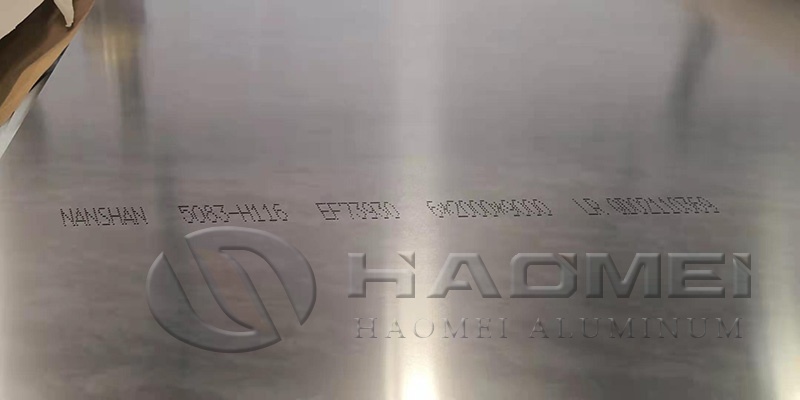
| Property | Typical Relevance for Tooling Work |
|---|---|
| Alloy family | Al-Mg, non-heat-treatable aluminum |
| Corrosion resistance | Excellent in saltwater and humid industrial environments |
| Weldability | Very good with suitable filler wire and procedure control |
| Strength | Higher than many general-purpose 5xxx aluminum grades |
| Machinability | Good, although cutting setup affects finish and chip control |
1. Is 5083 tooling plate flat enough for machining fixtures and vacuum tables?
5083 tooling plate can be suitable for machining fixtures, base plates, and large fabricated tables, but flatness depends more on the supplied plate condition than on the alloy name alone. A standard rolled plate may have a different flatness range from a stress-relieved, precision-sawn, or milled tooling plate.
For a fixture where parts are clamped at several points, normal mill flatness may be acceptable because the tooling can be machined after mounting. For a vacuum table, inspection surface, or CNC fixture requiring repeatable contact across a large area, specify the required flatness, thickness tolerance, and surface condition when requesting material.
A practical approach is to leave machining stock on both faces. After roughing one side, allow the plate to stabilize, then finish-machine the reference face and critical pockets. This reduces distortion caused by releasing rolling stress or removing material unevenly.
When corrosion resistance is also essential, 5083 aluminum plate is often selected for tooling used around seawater, wash-down areas, coastal fabrication shops, and marine construction projects.
2. Does 5083 tooling plate warp during CNC machining?
Any aluminum plate can move when machining removes internal stress or when excessive heat enters one side of the workpiece. 5083 is not automatically warp-free, yet good machining practice substantially reduces movement.
Common causes of distortion include heavy roughing on one face, inadequate workholding, dull cutters, high friction, and clamping a plate that is already bowed. Thin sections are particularly sensitive. A large plate may appear stable until deep pockets are machined, at which point the remaining ribs no longer balance the original stress pattern.
| Machining Practice | Effect on Plate Stability |
|---|---|
| Machine both sides progressively | Helps balance material removal |
| Use sharp cutters and correct coolant | Limits heat and built-up edge |
| Rough first, finish later | Allows movement before final tolerances |
| Avoid excessive clamp force | Prevents clamping-induced distortion |
| Specify stress-relieved stock where needed | Improves predictability on precision work |
For close-tolerance fixtures, rough-machine the plate, release it from the machine, and measure it before finish machining. This step is more reliable than attempting to force a large plate flat with clamps throughout the entire operation.
3. Is 5083 better than 6061 for tooling plates used near seawater?
For prolonged exposure to saltwater, spray, condensation, or chloride-containing cleaning solutions, 5083 is usually the stronger choice. Its magnesium-rich chemistry gives it excellent corrosion resistance in marine conditions. That is why it is widely used for ship structures, offshore platforms, boat components, and coastal equipment.
6061 can be effective for indoor tooling and many general fabricated parts, especially where heat treatment and certain machining characteristics are desired. However, when corrosion exposure is the dominant concern, 5083 generally provides a more durable base material.
The comparison changes when the tooling is highly complex and requires numerous tight threaded features, delicate walls, or exceptionally high dimensional stability. In that case, evaluate plate temper, thickness, machining route, and the operating environment rather than choosing solely by alloy number.
For applications that need marine corrosion performance but have different forming or strength requirements, 5086 aluminum plate is another aluminum-magnesium option worth comparing.
4. Can 5083 tooling plate be welded without losing its useful properties?
Yes. 5083 has very good weldability and is frequently used in welded marine structures and fabricated tooling frames. The heat-affected zone does soften compared with the original strain-hardened plate condition, so design calculations should account for reduced strength adjacent to welds.
For many 5083 projects, 5183 or 5356 filler wire is considered, depending on service conditions, required strength, and welding procedure. Clean joint preparation is essential. Remove oxide, moisture, oil, and shop contamination before welding because aluminum is sensitive to porosity.
Welding sequence also matters for tooling. Use balanced welds where possible, alternate sides on symmetrical fabrications, and avoid concentrating heat in one corner of a large plate. After welding, machine critical mounting faces rather than assuming the original surface will remain flat.
5. What thickness of 5083 tooling plate should be selected for a heavy fixture?
Thickness should be based on span, clamping loads, component weight, machining depth, and allowable deflection. A thick plate is not always the most efficient solution. Adding ribs, boxed supports, or a welded frame can create a stiffer structure with less weight than simply increasing plate thickness.
For a small fixture plate, the main concern may be thread engagement and local rigidity around clamps. For a large CNC fixture or marine work platform, bending across the unsupported span becomes more important. A plate that feels rigid when resting on a bench can deflect noticeably once mounted on widely spaced supports.
Ask the supplier for actual thickness tolerance and plate dimensions, then calculate deflection using the true support layout. If the part will be welded, allow machining stock on reference surfaces. If it will be exposed to seawater, avoid crevices where salt and moisture can remain trapped between the plate and its support structure.
A well-specified 5083 tooling plate order normally identifies alloy and temper, finished dimensions, flatness requirement, surface condition, edge treatment, ultrasonic inspection needs when applicable, and whether the material will be machined, welded, or used in direct marine exposure.