

5083 Aluminium Plate Price
How to Compare 5083 Plate Quotations Correctly
A 5083 plate quotation is not comparable unless every supplier uses the same alloy standard, temper, dimensions, inspection scope, delivery term, and weight basis. A lower unit rate can become more expensive when it excludes ultrasonic testing, classification certification, edge trimming, protective packing, or freight.
For marine structures, pressure equipment, LNG containment components, and welded transport equipment, 5083 is commonly specified because it combines high magnesium content with good corrosion resistance and weldability. However, it is not a single interchangeable commodity. The applicable standard and temper directly affect conversion cost and delivery risk.
Price Structure: Separate Metal From Fabrication Cost
Most mills and stockholders build a quotation from several cost elements. Purchasing teams should request each element separately rather than accepting one unexplained price per tonne.
| Cost element | What changes it | RFQ control point |
|---|---|---|
| Primary aluminium reference | LME aluminium price, regional premium, currency | State the pricing date, reference market, currency, and fixing method. |
| Alloy and slab premium | 5083 chemistry, slab availability, mill route | Confirm whether the premium is fixed or adjusted at shipment. |
| Rolling conversion | Thickness, width, plate length, temper, flatness | Narrow widths and common thicknesses usually have lower conversion requirements than special dimensions. |
| Testing and certification | UT, chemical analysis, mechanical tests, class witness | List tests and document type separately from the base plate rate. |
| Yield and cutting | Cut-to-length, trimmed edges, non-standard sizes | Specify whether invoicing uses theoretical, actual, or shipped weight. |
| Packing and logistics | Export seaworthy packing, route, Incoterms 2020 term | Compare the same delivery point and identify insurance responsibility. |
Do not compare an EXW quotation with a CIF or DDP quotation as if they represent the same delivered cost. The purchase order should identify the Incoterms 2020 rule and named place, such as FCA mill gate or CIF named port.
Standards That Change the Plate Value
For North American marine applications, ASTM B928/B928M covers high-magnesium aluminium-alloy sheet and plate intended for marine service and similar environments. ASTM B209/B209M is also widely used for aluminium sheet and plate, but ASTM B928/B928M adds requirements relevant to corrosion-resistant 5xxx marine products.
For European specifications, EN 573-3 defines chemical composition limits for wrought aluminium alloys, while EN 485-2 provides mechanical-property requirements for sheet, strip, and plate. EN 10204 defines inspection document types, including 3.1 inspection certificates based on specific inspection results.
A technically complete RFQ should state one primary product standard. Do not combine requirements from ASTM and EN without identifying which standard governs acceptance where values differ.
| Requirement | Practical specification wording |
|---|---|
| Alloy | AA 5083 / AlMg4.5Mn0.7, subject to the nominated standard |
| Product form | Rolled plate, thickness, width, length, and thickness tolerance |
| Temper | H116, H321, H111, or O, as required by design and forming method |
| Standard | ASTM B928/B928M or EN 485-2 with EN 573-3 chemistry |
| Documentation | EN 10204 3.1 certificate, heat number traceability, test results by plate or heat |
| Surface | Mill finish, PVC film if needed, permitted scratches, edge condition |
| Inspection | UT standard and acceptance class, if required by project specification |
For marine hull and deck structures, H116 and H321 are frequently requested because they are associated with improved resistance to exfoliation corrosion for applicable 5xxx products. These tempers should not be substituted automatically for H111 or O. The selected temper must match forming, welding, and structural strength requirements.
Corrosion and Testing Requirements Worth Paying For
5083 contains approximately 4.0% to 4.9% magnesium under commonly used alloy composition standards, with manganese additions contributing to strength. High-magnesium 5xxx alloys can become sensitized after extended exposure at elevated temperatures. Sensitization can reduce corrosion resistance, particularly in chloride environments.
ASTM G66 covers exfoliation corrosion testing by the ASSET method. ASTM G67 covers susceptibility to intergranular corrosion using the nitric acid mass loss test, often called NAMLT. ASTM B928/B928M references corrosion testing requirements for applicable marine products and tempers.
Ask the supplier to identify whether corrosion testing is required for production material, qualification material, or only when specified by the governing standard. Requiring a test without defining sample frequency, acceptance criteria, and reporting format can create avoidable delays.
For classification-controlled work, confirm the ship classification society, approved mill status, surveyor attendance requirements, and certificate wording before production. Lloyd's Register, DNV, ABS, and Bureau Veritas may have separate approval and material-certification procedures. A mill certificate alone is not automatically a class certificate.
Compare 5083 Against the Nearest Alternatives
Substitution should be evaluated against design calculations, welding procedure requirements, corrosion exposure, and approval documentation.
| Alloy | Typical reason to consider it | Commercial caution |
|---|---|---|
| 5083 aluminum plate | Marine structures needing corrosion resistance and welded strength | Confirm temper and corrosion-test requirements before comparing rates. |
| 5086 aluminum plate | Marine and welded structures with similar application range | Mechanical values, availability, and class approvals may differ by thickness and temper. |
| 5052 | General sheet-metal fabrication and moderate-strength corrosion service | It is not a direct structural replacement where 5083 strength is required. |
| 5456 | Selected high-strength marine applications | Supply availability and sensitization-control requirements can affect lead time. |
Avoid approving an alloy substitution only from a datasheet comparison. Confirm the exact thickness, temper, minimum yield strength, elongation, corrosion requirement, welding consumable compatibility, and classification requirement.
RFQ Checklist for Large-Volume Contracts
Use this checklist to make supplier quotations commercially comparable:
State annual quantity by thickness, width, length, and temper rather than one combined tonnage figure.
Define whether plate is supplied as mill length, cut-to-length, or precision-sawn length.
Request actual-weight and theoretical-weight calculations for each line item.
Specify ASTM B928/B928M or EN 485-2 and EN 573-3, not only "marine grade 5083."
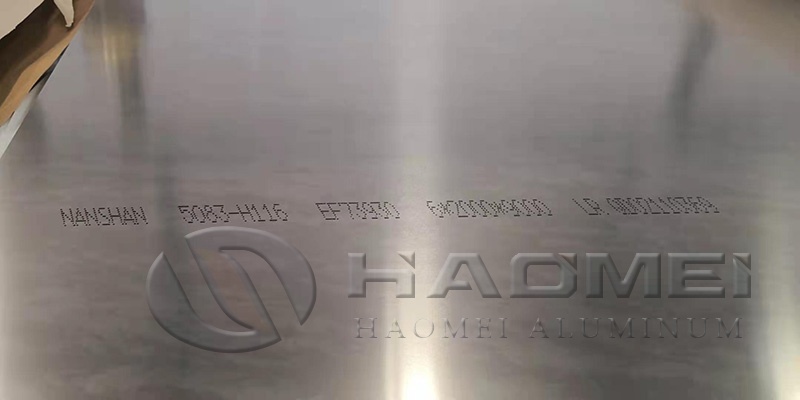
Require heat number traceability from plate marking through packing list and inspection certificate.
State required testing: chemistry, tensile properties, ultrasonic examination, corrosion test, or classification witness.
Define acceptable flatness, camber, edge condition, surface protection, and packing method.
Fix the aluminium reference date and formula for any metal-price adjustment.
Require a delivery schedule by month, including mill production time and port transit time.
Record rejection handling, replacement timing, and responsibility for third-party inspection costs.
Issue the same controlled specification and pricing template to each supplier. This approach isolates genuine differences in metal reference, conversion, certification, and logistics instead of allowing hidden scope differences to determine the awarded rate.